Skip to content
DevDhoop
What is DhoopIngredientsHow it BurnsPurposesSafetyBlog
  1. Home
  2. Dhoop Ingredients & Sourcing Explained

Dhoop Ingredients & Sourcing Explained

Every dhoop we describe on this site is explained down to its real ingredients — no vague "natural fragrance" labels. This page goes deeper than the homepage's ingredient glossary: what each ingredient actually is, why it's traditionally used in dhoop, and how to tell a genuinely natural blend from one that only claims to be.

Judging Ingredient Quality

Quality varies enormously between makers, and an ingredient list doesn't always tell the full story. A few things worth checking on any dhoop you're considering:

  • •Resin-based ingredients (like guggal or loban) are gum resins collected from trees — they should smell earthy and slightly smoky when burned, not sweet or synthetic.
  • •Wood and root ingredients (like chandan) have a warm, dry, woody character that develops rather than an immediate sharp burst of fragrance.
  • •Floral ingredients (like rose, mogra or lavender) are the ones most commonly replaced with synthetic fragrance oils, since real flower-derived material is more expensive — a floral note that smells identical to perfume rather than a dried flower is worth questioning.
  • •"Natural" on a label isn't a regulated claim in most markets — what's actually listed as ingredients matters more than the word on the front.

Ingredient Profiles

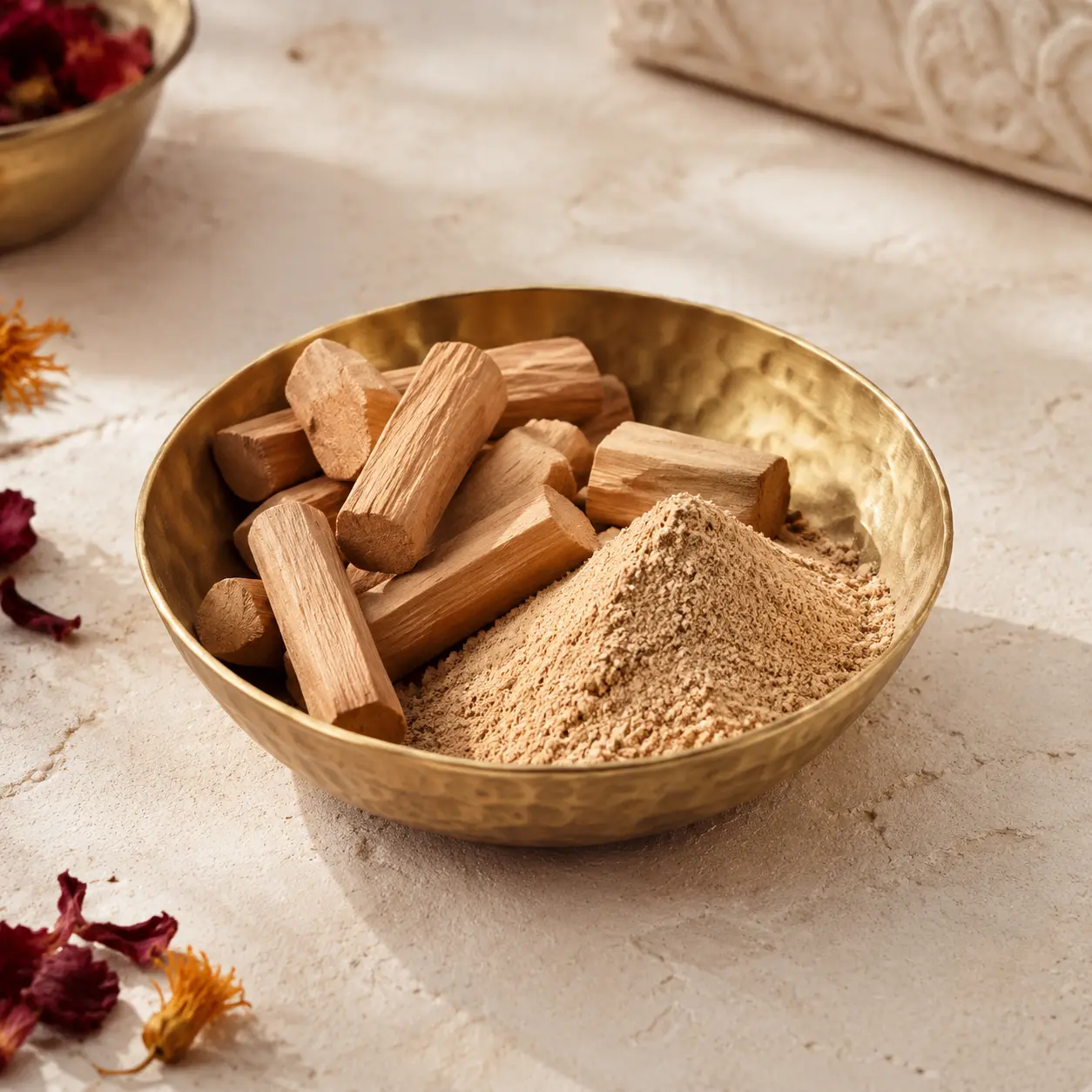
Chandan (Sandalwood)

Chandan (Sandalwood)

A warm, woody fragrance widely used in daily pooja.

What it is
Chandan is sandalwood — heartwood from the slow-growing Santalum tree, ground into a fine powder once harvested.
Why it's used
Its warm, dry, woody fragrance is one of the most recognizable base notes in Indian dhoop and has been used in rituals for centuries.
Worth knowing
Because the tree grows slowly, genuinely sandalwood-heavy dhoop tends to cost more than dhoop where sandalwood is used only as a minor note.
Guggal

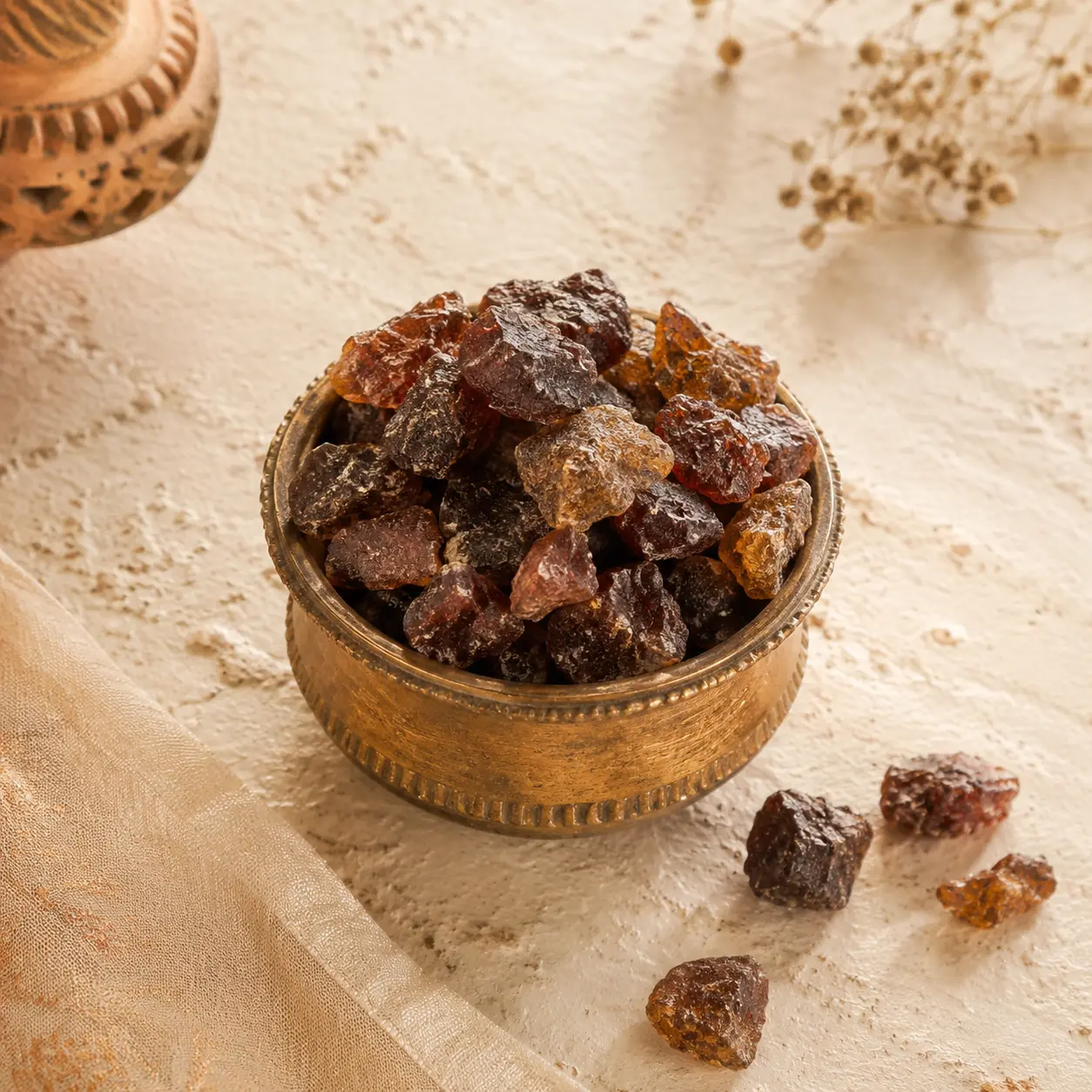
Guggal

A resin with a deep, earthy aroma, traditional to Indian rituals.

What it is
Guggal is a gum resin — a hardened sap collected from the Commiphora wightii tree, native to arid regions of India.
Why it's used
Its deep, earthy, slightly smoky aroma is a traditional base for temple and daily-pooja dhoop.
Worth knowing
Guggal resin is typically sold in small hardened lumps or a coarse powder — a "guggal" product that's a fine, uniform powder with no resin texture is worth a second look.
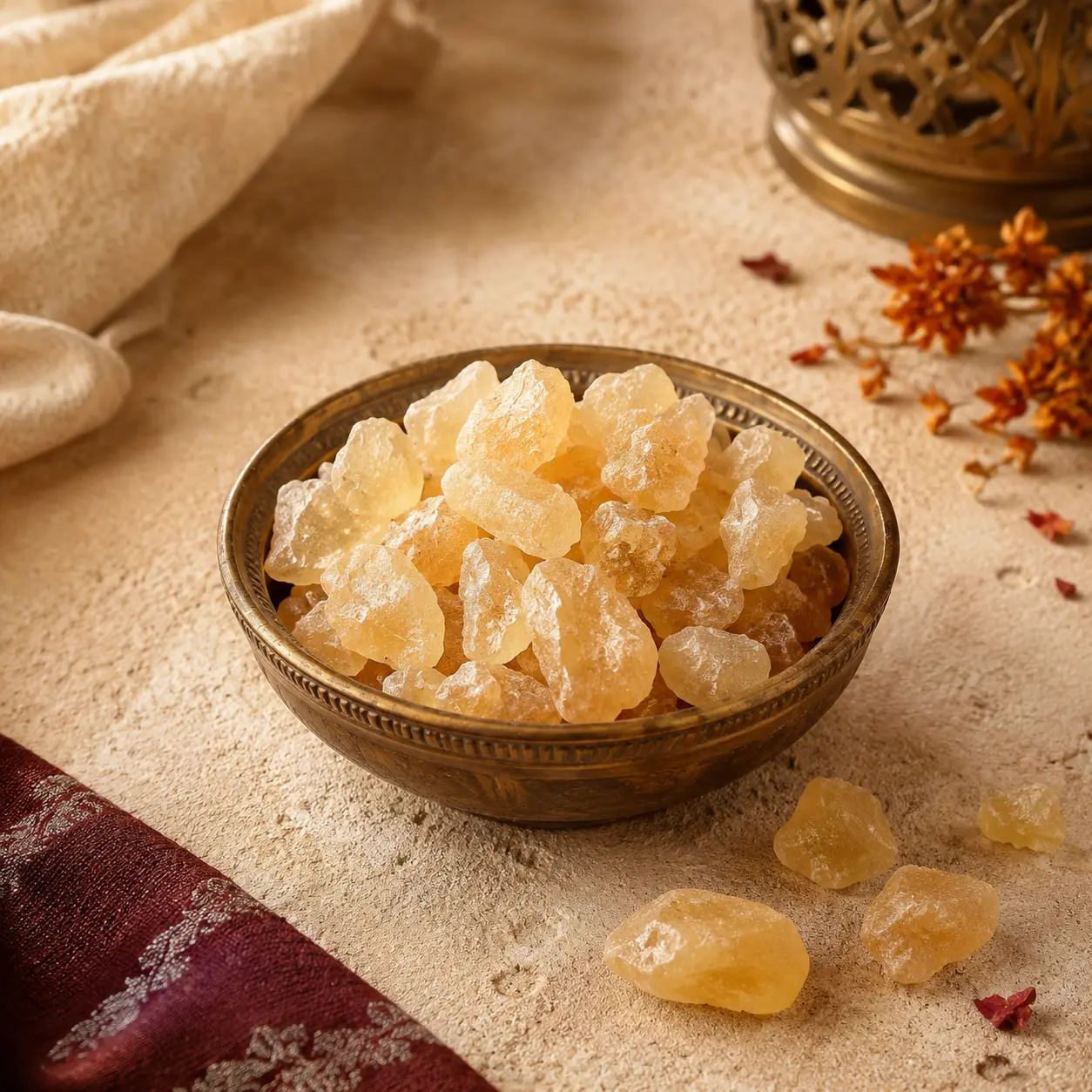
Loban (Frankincense)

Loban (Frankincense)

A resin with a calming, balsamic scent, also known as frankincense.

What it is
Loban — also known as frankincense or olibanum — is another tree resin, tapped from Boswellia trees.
Why it's used
It has a calming, balsamic, slightly citrus-edged scent and is one of the most widely used resins in incense traditions across the world, not just in India.
Worth knowing
Real loban resin softens slightly and can be sticky in humid weather — a sign it's an actual resin rather than a synthetic replica.
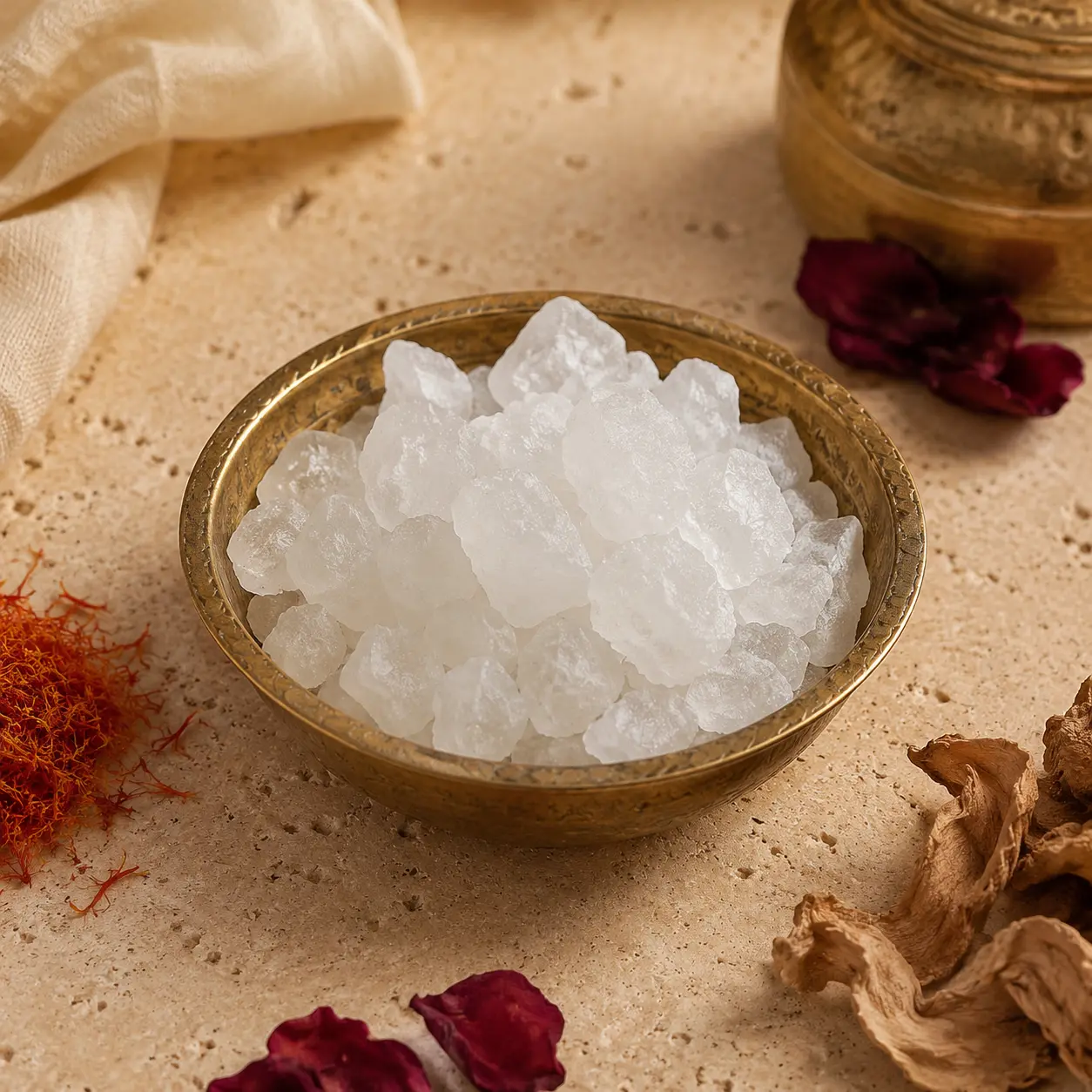
Kapoor (Camphor)

Kapoor (Camphor)

A crisp, cooling aroma commonly used in quick daily rituals.

What it is
Kapoor is camphor, traditionally derived from the wood of the camphor laurel tree — though most camphor sold today, including for dhoop, is synthesised rather than tree-extracted.
Why it's used
Its sharp, cooling aroma and fast, clean burn make it common in short daily rituals rather than long-burning formats.
Worth knowing
Camphor pieces burn quickly and should never be left unattended.See our safety guide
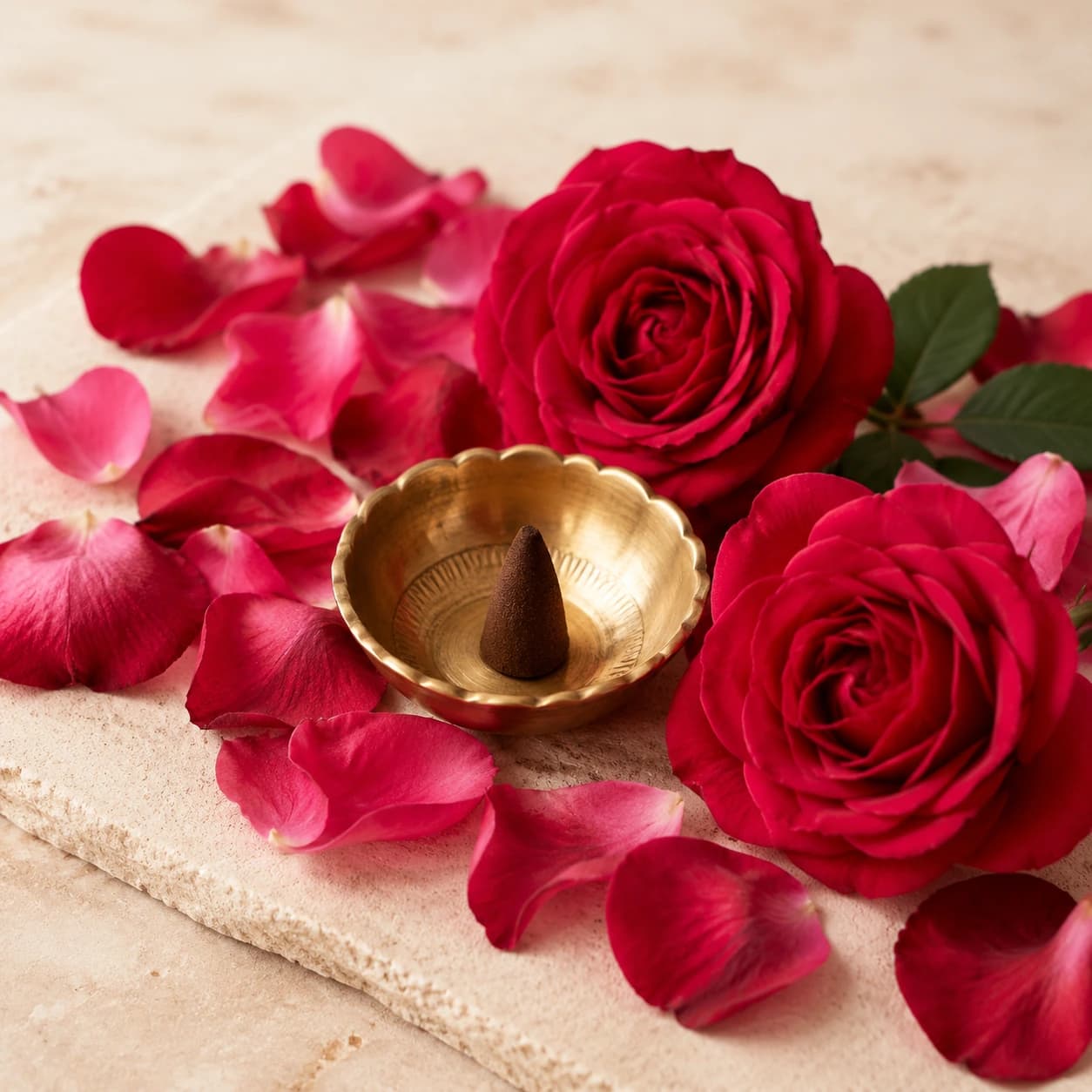
Rose

Rose

A soft floral fragrance for a calm, welcoming space.

What it is
Rose fragrance in dhoop can come from real dried rose petals or buds, or rose-derived oil, blended into the base mixture.
Why it's used
A soft, familiar floral note commonly used to create a calm, welcoming atmosphere.
Worth knowing
Genuine rose material tends to smell slightly less "sharp" and perfumed than synthetic rose fragrance oil.
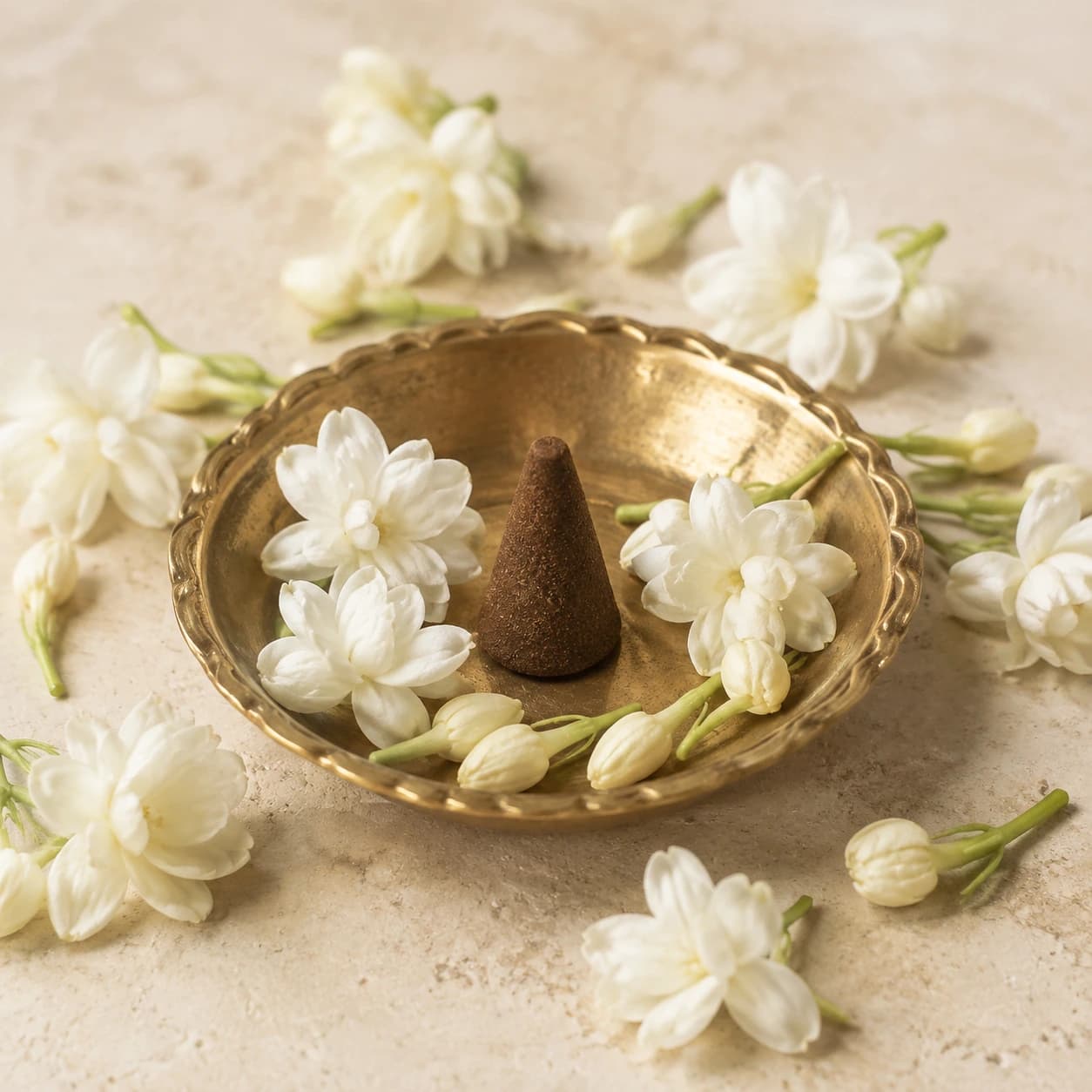
Mogra (Jasmine)

Mogra (Jasmine)

A sweet jasmine note, popular in festive and gifting fragrances.

What it is
Mogra is a variety of Arabian jasmine, prized for its intensely sweet, heady floral scent.
Why it's used
Popular in festive and gifting dhoop for its rich, celebratory fragrance.
Worth knowing
Real jasmine-derived scent is genuinely expensive to produce, so "mogra" dhoop sold very cheaply is more likely synthetic.
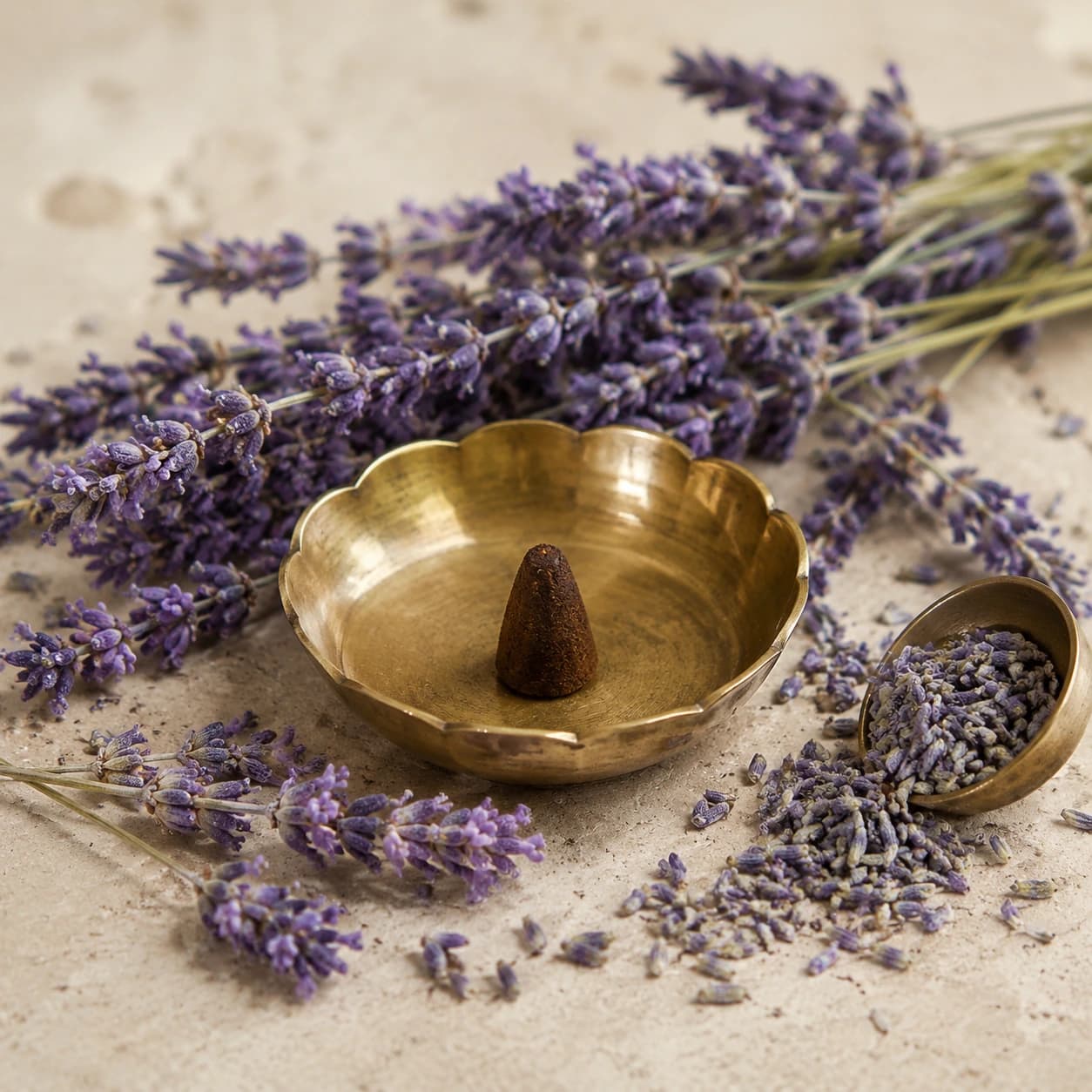
Lavender

Lavender

A relaxing floral-herbal scent suited to quiet evenings.

What it is
Lavender is a flowering herb; its fragrance comes from oil extracted from the flower spikes.
Why it's used
A relaxing, herbal-floral scent suited to quiet evenings rather than festive or ritual settings.
Worth knowing
Lavender is one of the more consistently available natural essential oils, so genuinely natural lavender-scented dhoop is more common than with rarer florals like mogra.

How Dhoop Is Traditionally Made

Dhoop-making is a real craft with established methods — here's how it's traditionally done, based on general practice across Indian dhoop-making, not a specific claim about any one maker's process.

  • •Sticks and cones are typically hand-rolled — ingredients are blended into a paste and shaped by hand, either around a bamboo core or, for coreless dhoop, on their own. Cups are hand-pressed into shape rather than rolled.
  • •Handmade dhoop is usually produced in small batches by artisan workshops rather than industrial production lines — the process from blending to a finished, dried piece can take several days.
  • •A common traditional binder for sticks and cones is jigat (also called joss powder) — a fine bark powder from the litsea glutinosa tree — chosen because it holds the blend together and helps it burn evenly without needing a charcoal base. Cow dung-based cups follow a different tradition: the dung is sun-dried and ground fine, then bound with natural agents like ghee or jaggery before shaping.
  • •Traditional dhoop is air-dried or sun-dried rather than machine-dried, typically over one to several days, letting the shape set and harden naturally before it's ready to use.
  • •Key ingredients are traditionally tied to specific growing regions — sandalwood most notably from Karnataka's Mysore region, long recognized for its quality, alongside guggal, loban and other ingredients sourced from their own traditional regions.
  • •Handmade dhoop is traditionally the work of skilled artisans, often in small, family-run workshops — a different scale and process from large-scale factory production.

Ingredient questions

DevDhoop

Fragrance of devotion

ExploreDhoop Guide: Sticks, Cones, Cups & How to UseRituals: Dhoop for Pooja, Festivals & MeditationDhoop Ingredients & Sourcing ExplainedFAQs
© 2026 DevDhoop. All rights reserved.