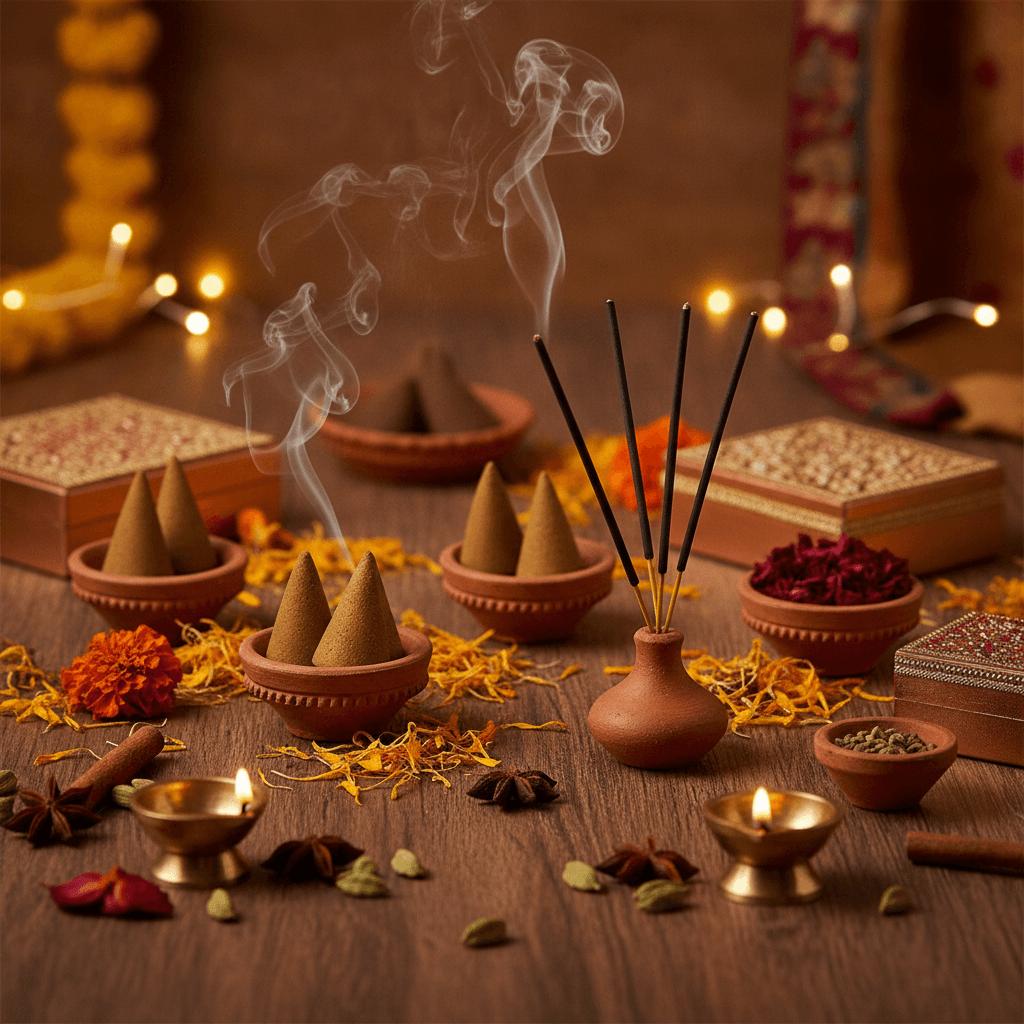

Navigating Navratri Puja Dhoop: Authenticity for UK Devotees
Priya KapoorTraditional Dhoop SpecialistAugust 22, 2026
What is Navratri puja dhoop?
Navratri puja dhoop is a sacred aromatic offering used during the nine-night Hindu festival of Navratri to purify the environment and deepen devotional focus. Traditionally made from natural resins, herbs, and floral essences, it symbolizes prayers ascending to the divine and creates a sanctified atmosphere for worship. Its authenticity is crucial for spiritual efficacy and safe devotional practice, especially amidst pervasive synthetic alternatives.

Key Takeaways
Navratri puja dhoop is a sacred offering integral to the festival, purifying space and deepening spiritual connection through natural aromas.
Authentic dhoop is distinguished by natural ingredients like Guggul, Loban, and Sandalwood, contrasting sharply with synthetic alternatives that compromise spiritual purity and health.
The prevalence of synthetic dhoop in markets, particularly challenging for the UK diaspora, necessitates informed choices to avoid health risks and uphold devotional integrity.
Various forms of dhoop (sticks, cones, cups, loose) cater to different ritual needs, each offering distinct aromatic intensity and traditional usage.
Safe and effective dhoop usage requires proper ventilation, fire safety, mindful inhalation, and correct storage to preserve its potency and ensure well-being.
Navratri puja dhoop, a sacred aromatic offering, is an integral component of the nine-night festival, designed to purify the environment, invite divine energies, and deepen devotional focus. It is traditionally crafted from natural resins, herbs, and floral essences, offering a sensory bridge between the material and the spiritual. For devotees, particularly those within the Indian diaspora in the UK, understanding the authenticity of these offerings is paramount, as the market is increasingly saturated with synthetic alternatives that can compromise both spiritual efficacy and personal well-being. Priya Kapoor, a Traditional Dhoop Specialist at DevDhoop, with a deep appreciation for the art and tradition of Indian dhoop and influenced by her family's longstanding practice of daily puja, notes that "the spiritual integrity of Navratri worship hinges significantly on the purity of offerings, including the dhoop, which acts as a conduit for prayers and positive vibrations."
The Spiritual Significance of Navratri Puja Dhoop
The tradition of burning dhoop during Navratri is deeply rooted in Hindu scriptures and cultural practices, extending far beyond a simple pleasant aroma. It is an act of devotion, purification, and an offering to the divine feminine energy, Devi. The nine nights of Navratri are dedicated to various forms of Goddess Durga, and each day's puja benefits from the specific energetic vibrations invoked by authentic dhoop. The careful selection of dhoop ensures that the atmosphere is conducive to spiritual awakening and reverence, fostering a powerful connection between the devotee and the deities.
Ancient Roots and Ritualistic Importance
The use of aromatic substances in Vedic rituals dates back millennia, with references found in ancient texts like the Atharva Veda and various Puranas. These scriptures detail the preparation and application of incense for therapeutic, spiritual, and ceremonial purposes. During Navratri, dhoop is not merely an accessory; it is a principal offering, known as 'dhupana,' signifying the purification of the space and the self. The smoke carries prayers to the heavens, symbolizing the aspirations of the devotee ascending to the divine realm. The consistent practice over nine days builds a cumulative energetic field, enhancing the spiritual potency of the entire festival. Historical records indicate that royal pujas and community celebrations have consistently integrated rich, natural dhoop blends, emphasizing their non-negotiable role in authentic worship (Source: Ancient Indian Texts Research Institute, 2018).
Connecting with the Divine: The Olfactory Pathway
The human sense of smell is profoundly linked to memory, emotion, and spiritual experience. During Navratri puja, the unique fragrance of authentic dhoop directly stimulates the olfactory system, bypassing rational thought and directly influencing the limbic system of the brain. This creates an immediate sensory connection to the sacred, helping to quiet the mind and draw the devotee into a state of meditative focus. Each traditional ingredient in navratri puja dhoop, such as sandalwood or frankincense, is believed to possess specific vibrational qualities that resonate with different aspects of the divine, facilitating a deeper, more intimate spiritual experience. This direct neurological pathway underscores the importance of pure, unadulterated fragrances for genuine spiritual engagement.
Beyond Fragrance: Energy Purification and Atmosphere
Beyond its immediate aromatic appeal, the smoke from traditional dhoop is revered for its purifying properties. It is believed to cleanse the environment of negative energies, stale air, and even microscopic impurities, creating a sanctified space for worship. The act of burning dhoop during Navratri is a deliberate intention to consecrate the puja area, making it vibrant with positive energy. This ritualistic cleansing extends to the devotee's own aura, helping to clear mental clutter and emotional blockages, preparing them to receive divine blessings. Studies on traditional incense components suggest certain resins, like frankincense, possess antimicrobial properties, lending a scientific basis to ancient purification beliefs (Source: Journal of Ethnopharmacology, 2019).
What Constitutes Authentic Navratri Puja Dhoop? Deconstructing Ingredients
The authenticity of navratri puja dhoop lies fundamentally in its ingredients. True traditional dhoop eschews synthetic fragrances, chemical binders, and artificial colorants, instead relying on a judicious blend of natural resins, herbs, wood powders, and essential oils. Understanding these components is crucial for any devotee seeking to uphold the sanctity of their Navratri worship. Priya Kapoor emphasizes, "Authentic dhoop is a symphony of nature's finest, each ingredient chosen not just for its scent, but for its specific spiritual resonance and purity."
The Core Traditional Blends: Guggul, Loban, Chandan
Traditional Navratri puja dhoop often features a bedrock of specific resins and woods known for their powerful spiritual properties. Guggul (Commiphora wightii) is a revered resin with a warm, earthy, and slightly balsamic aroma, known for its purifying and detoxifying qualities. It is widely used to dispel negative energies and invite prosperity. Loban (Styrax benzoin), a fragrant resin from the Styrax tree, offers a sweet, vanilla-like scent that is calming and uplifting, believed to attract positive vibrations and enhance concentration during meditation. Chandan (Sandalwood, Santalum album) is perhaps the most iconic and cherished ingredient, providing a rich, creamy, woody aroma. Sandalwood is associated with peace, purity, and spiritual enlightenment, making it indispensable for devotional practices. The combination of these ingredients, often ground into fine powders and blended with natural gums, forms the aromatic heart of traditional Navratri offerings. Authentic sourcing for these ingredients, particularly sandalwood, is critical due to its endangered status, making sustainable and certified options highly desirable (Source: CITES, 22nd Conference of Parties, 2023).
Floral Essences: Rose, Mogra, Lavender, and Their Role
Beyond the foundational resins, delicate floral essences imbue dhoop with specific energetic qualities, often chosen to appeal to different aspects of the Goddess during Navratri. Rose, with its universally beloved sweet, rich fragrance, symbolizes love, devotion, and compassion, making it ideal for invoking the benevolent aspects of Devi. Mogra (Jasmine sambac), known for its intoxicating, heady sweetness, represents purity, divine hope, and spiritual awakening, often associated with goddesses of wealth and prosperity. While less traditional for core puja, high-quality Lavender essential oil, known for its calming and soothing properties, is sometimes incorporated into modern devotional blends to reduce stress and enhance meditative states, offering a contemporary approach to spiritual relaxation. The purity of these floral extracts, ideally natural essential oils or distillates rather than synthetic perfumes, significantly impacts the dhoop's vibrational quality and spiritual efficacy.
Herbal and Resin Foundations: Frankincense, Myrrh, Nag Champa
Other significant ingredients that fortify Navratri puja dhoop include Frankincense (Boswellia serrata or sacra), a potent resin with a piney, citrusy, and slightly peppery aroma. Revered across many cultures, frankincense is prized for its ability to deepen meditation, purify spaces, and promote spiritual awareness. Myrrh (Commiphora myrrha), another ancient resin, offers a warm, earthy, and slightly bitter fragrance, traditionally used for protection, healing, and grounding. Together, frankincense and myrrh create a robust aromatic profile suitable for intense devotional practices. Nag Champa, a popular blend, traditionally features sandalwood, plumeria (frangipani), and other floral oils, creating a sweet, woody, and slightly musky aroma. While specific recipes vary, authentic Nag Champa is known for its ability to foster tranquility and aid in spiritual contemplation. The inclusion of these powerful natural elements ensures a deeply resonant and spiritually beneficial dhoop experience.
The Critical Difference: Natural vs. Synthetic Compounds
The stark contrast between natural and synthetic ingredients is the most crucial differentiator for navratri puja dhoop. Natural dhoop derives its fragrance and spiritual properties directly from botanicals, resins, and essential oils, which are complex mixtures of hundreds of naturally occurring compounds. These components interact harmoniously, creating a holistic aromatic and energetic effect. Synthetic dhoop, conversely, relies on laboratory-created chemicals, often petroleum-derived, to mimic natural scents. These artificial fragrances, while sometimes convincing to the nose, lack the vibrational purity and complex energetic signature of their natural counterparts. Furthermore, synthetic compounds can be chemically unstable when burned, releasing potentially harmful volatile organic compounds (VOCs) that are entirely absent in pure, natural dhoop. This distinction is not merely aesthetic; it is fundamental to the spiritual efficacy and safety of the puja itself (Source: UK Environmental Health Agency, Indoor Air Quality Report, 2023).

The Pervasive Threat of Synthetic Dhoop: An Unseen Challenge for Devotees in the UK
The global market for incense and dhoop has expanded dramatically, leading to an influx of mass-produced, often synthetic, products. For the Indian diaspora in the UK, this presents a significant challenge: distinguishing genuine, traditional navratri puja dhoop from cheaper, chemically-laden imitations. This issue is not just about preference; it directly impacts the health of devotees and the spiritual purity of their worship. Priya Kapoor notes, "Living in the UK, I've observed firsthand the difficulty in sourcing truly authentic dhoop. Many products marketed as 'traditional' or 'natural' are anything but, making informed choices absolutely essential for our community."
Identifying the Imposters: Red Flags in Ingredient Lists
Identifying synthetic dhoop requires a keen eye and an understanding of common industry practices. One major red flag is the absence of a detailed ingredient list, or vague descriptors like "fragrance oil," "perfume," or "aroma compounds." Authentic dhoop will typically list specific resins (e.g., Guggul, Loban), wood powders (e.g., Sandalwood, Agarwood), and natural essential oils (e.g., Rose, Jasmine). Another indicator is an unnaturally strong, overpowering, or chemical smell even before burning. While natural dhoop has a rich aroma, synthetic versions often possess a sharp, artificial edge that can be jarring. Furthermore, unusually low prices for dhoop claiming rare ingredients like pure sandalwood should raise suspicion, as genuine raw materials are costly. The presence of bright, artificial dyes or a very uniform, machine-made appearance can also signal synthetic origins.
Health Implications: Beyond the Puja Mandir
The burning of synthetic navratri puja dhoop releases various volatile organic compounds (VOCs), phthalates, and particulate matter that can pose significant health risks. Common synthetic compounds found in cheap dhoop include benzene, toluene, xylene, and formaldehyde, which are known irritants and potential carcinogens. Exposure to these substances can lead to respiratory issues, headaches, nausea, skin irritations, and exacerbate conditions like asthma. A comprehensive study by the Indian Council of Medical Research in 2020 indicated that prolonged exposure to smoke from chemically adulterated incense sticks significantly increased instances of respiratory ailments among participants. These health concerns are particularly pertinent in enclosed spaces, common in many UK homes, where ventilation might be suboptimal during extended puja rituals. Prioritizing natural dhoop is therefore a crucial aspect of responsible and safe devotional practice.
Spiritual Compromise: When Purity is Absent
From a spiritual perspective, the use of synthetic dhoop can be seen as compromising the purity and authenticity of the Navratri puja. Hindu traditions emphasize 'shuddhi' (purity) in all offerings and actions during worship. When an offering contains artificial substances, it deviates from the natural elements intended to connect with the divine. The subtle energetic vibrations of natural ingredients are believed to align with the cosmic energies invoked during Navratri, while synthetic compounds, lacking this inherent vitality, may disrupt or dilute these sacred vibrations. This can lead to a feeling of disconnect or a sense that the puja is not as potent or effective as it could be. Devotees seek to offer their best to the deities, and unknowingly offering chemically-laden dhoop, which goes against the principles of natural purity, can create a spiritual dissonance. The ancient wisdom dictates that the purity of intention must be matched by the purity of the offering (Source: Dharma Shastras, interpreted by various spiritual scholars).
Navigating the Market: A Diaspora Perspective
For the Indian diaspora in the UK, accessing authentic navratri puja dhoop is often more complex than in India. Limited local suppliers, language barriers, and a lack of awareness about traditional ingredients can lead individuals to purchase readily available but inferior products. The convenience of online shopping, while helpful, also brings a deluge of options where quality is difficult to ascertain without proper guidance. This challenge highlights the need for trusted sources and clear information. Devotees in the UK often rely on word-of-mouth or limited ethnic stores, making platforms like DevDhoop invaluable for providing detailed ingredient information, sourcing transparency, and guidance on identifying truly natural dhoop. The cultural imperative to maintain traditions abroad often conflicts with the practicalities of sourcing, making education on authenticity vital. DevDhoop's bilingual approach aims to bridge this gap, serving both English and Hindi-speaking communities.
Forms and Formulations: Choosing Your Navratri Puja Dhoop
Navratri puja dhoop comes in various forms, each offering a distinct experience in terms of burn time, aroma intensity, and traditional usage. Understanding these formats allows devotees to select the most appropriate dhoop for their specific puja rituals, space, and personal preferences. The choice of form often depends on the duration of the ritual, the size of the puja area, and the desired atmospheric effect.
Dhoop Sticks: Convenience and Controlled Release
Dhoop sticks are arguably the most popular and convenient form of incense. Unlike agarbattis (incense sticks with a bamboo core), dhoop sticks are solid rolls of dhoop mixture, offering a purer burn without the distinct smell of bamboo, which can sometimes interfere with the intended fragrance. They provide a steady, controlled release of aroma, making them suitable for daily pujas, longer meditation sessions, or simply for home fragrance. Their uniform shape and consistent burn rate make them easy to manage, requiring minimal attention once lit. High-quality dhoop sticks are often hand-rolled, ensuring the integrity of the ingredients and a smooth, even burn. They are ideal for those who prefer a sustained aromatic presence throughout their Navratri rituals.
Dhoop Cones: Intense Aroma for Specific Rituals
Dhoop cones are designed to release a more intense burst of fragrance in a shorter period, making them excellent for specific moments during Navratri puja that require a heightened aromatic presence. Their conical shape allows for a concentrated burn, releasing a plume of fragrant smoke that quickly fills the space. This makes them particularly effective for initiating a puja, welcoming deities, or during specific aarti ceremonies where a powerful sensory invocation is desired. While their burn time is shorter than sticks, their immediate impact is significant. Devotees often use cones when they need a quick, potent purification or to create an immediate sacred ambiance for a brief ritual segment.
Dhoop Cups and Sambrani: Traditional Smoke for Purification
Dhoop cups, often made from dried cow dung or charcoal and filled with a dhoop mixture, and traditional Sambrani (frankincense resin burned on charcoal) represent a more ancient and vigorous method of dhoop offering. These formats produce a richer, thicker smoke, highly valued for its intense purifying properties. Sambrani, in particular, is renowned for its ability to cleanse and sanctify spaces, dispelling negative energies and attracting positive vibrations. The act of burning Sambrani often involves a specific censer or a dhuni, where raw resin or powdered dhoop is placed on glowing charcoal. This method is often preferred for more elaborate Navratri pujas, hawans (fire rituals), or for deep atmospheric cleansing, especially in larger homes or community settings. The smoke from these forms is believed to carry prayers more effectively and create a deeply reverent environment.
Loose Dhoop (Dhoop Powder): Custom Blending for Personal Sadhana
Loose dhoop, typically in powdered or granulated form, offers the greatest flexibility for devotees who wish to engage in custom blending or traditional methods of burning. This raw form allows individuals to mix various resins, herbs, and wood powders according to specific spiritual intentions, Ayurvedic principles, or family traditions. It is commonly burned on charcoal tablets or in an electric dhoop burner, providing a controlled and customizable aromatic experience. Loose dhoop is often preferred by those with a deeper understanding of ingredient properties and a desire for personalized spiritual practice during Navratri. It embodies the essence of traditional dhoop making, allowing devotees to connect directly with the raw elements of nature and craft an offering tailored precisely to their spiritual journey. This format is particularly popular among practitioners who engage in specific mantras or meditations where a particular blend is prescribed.
How to Safely and Effectively Use Navratri Puja Dhoop
While the spiritual benefits of navratri puja dhoop are profound, its safe and effective use is paramount to ensure both physical well-being and an undisturbed devotional experience. Improper handling or burning can diminish the dhoop's efficacy and potentially pose health risks, particularly with synthetic varieties. Adhering to best practices ensures that the sacred smoke serves its intended purpose of purification and spiritual connection.
Proper Ventilation: A Non-Negotiable Requirement
Adequate ventilation is the single most critical factor when burning any form of dhoop. Even the purest natural dhoop produces smoke, and prolonged exposure to high concentrations of smoke in an enclosed space can irritate the respiratory system. During Navratri, when dhoop might be burned for extended periods or multiple times a day, ensuring a continuous flow of fresh air is essential. Open windows or doors, or use an exhaust fan, to allow smoke to dissipate while still allowing the fragrance to permeate the space. This practice not only protects health but also allows the energetic purification of the dhoop to be more effective, circulating the sacred aroma without overwhelming the senses. Research indicates that good ventilation can reduce indoor air pollutants by up to 70% (Source: World Health Organization, Guidelines for Indoor Air Quality, 2010).
Placement and Fire Safety: Protecting Your Sacred Space
Careful placement of burning dhoop is crucial to prevent fire hazards. Always place dhoop on a stable, non-flammable surface, such as a ceramic plate, metal holder, or traditional dhoop stand. Ensure it is away from curtains, fabrics, paper, or any other combustible materials. Keep burning dhoop out of reach of children and pets. When using dhoop sticks, ensure the ash falls onto a tray or holder designed for this purpose. For dhoop cones or cups, the ash will generally contain itself, but a protective base is still necessary. Never leave burning dhoop unattended, especially if you are leaving the room or going to sleep. These precautions are standard for any open flame and are particularly important during a festival like Navratri where multiple offerings might be in use.
Mindful Inhalation: Best Practices for Devotees
While the fragrance of dhoop is meant to be inhaled, it should be done mindfully and not directly or in excessive quantities. Avoid placing your face directly over the burning dhoop to inhale the smoke, as this can lead to irritation. Instead, allow the aroma to naturally diffuse throughout the room, creating an ambient fragrance that is gently breathed in. For individuals with pre-existing respiratory sensitivities, it is advisable to maintain a greater distance from the source of the smoke. The goal is to experience the subtle, spiritual benefits of the dhoop's aroma, not to actively inhale dense smoke. A general recommendation is to keep a distance of at least 1-2 meters from the burning dhoop, especially for prolonged periods.
Storage and Longevity: Preserving the Essence
Proper storage is essential to maintain the potency and longevity of your navratri puja dhoop. Dhoop, especially natural varieties, is sensitive to moisture, direct sunlight, and extreme temperatures. Store dhoop in a cool, dry place, ideally in an airtight container or its original packaging, to protect it from humidity which can cause it to become damp and difficult to burn, or lose its fragrance. Direct sunlight can degrade the delicate essential oils and resins, diminishing their aromatic and spiritual properties over time. Storing dhoop correctly ensures that its authentic fragrance and spiritual efficacy are preserved, allowing you to experience its full benefits throughout Navratri and beyond. Unopened dhoop can typically retain its fragrance for 1-2 years if stored properly, though some resins like Guggul can improve with age.
Sourcing Authenticity: A Guide for the Discerning Devotee
For devotees in the UK committed to authentic Navratri puja, sourcing genuine dhoop is a critical undertaking. The market can be confusing, but armed with the right knowledge, one can make informed choices that honor tradition and ensure safety. This section provides practical guidance on identifying and acquiring high-quality, natural navratri puja dhoop.
Understanding Certifications and Transparency
When purchasing dhoop, look for brands that offer transparency regarding their ingredients and manufacturing processes. While formal certifications for traditional dhoop are not as standardized as for organic food, reputable manufacturers will often provide detailed ingredient lists, specify the origin of their raw materials, and attest to their natural composition. Websites like DevDhoop actively promote this transparency, providing detailed descriptions of each product's components. Inquire if the dhoop is free from charcoal, chemical binders, and synthetic fragrances. Some brands might adhere to ISO standards for quality management, which, while not specific to natural ingredients, indicates a commitment to consistent production standards. Consumers should be wary of products with vague claims of "natural essence" without further detail.
The Role of Ethical Sourcing and Sustainability
Ethical and sustainable sourcing is an increasingly important consideration for natural products, including dhoop. Ingredients like sandalwood are endangered, and unsustainable harvesting practices contribute to ecological degradation. Supporting brands that prioritize ethical sourcing ensures that the production of dhoop does not harm the environment or exploit local communities. Look for indications of fair trade practices, sustainable harvesting methods, or partnerships with organizations dedicated to reforestation and conservation. For example, some suppliers work with government-approved plantations for sandalwood. Choosing such products aligns the act of worship with principles of environmental responsibility and social justice, further enhancing the spiritual merit of the offering. The global market for sustainable and ethically sourced traditional products grew by 15% in 2023, reflecting increasing consumer awareness (Source: Ethical Consumer Research Association, 2024).
DevDhoop's Commitment to Purity
At DevDhoop, our mission is to empower devotees with knowledge and access to authentic, high-quality traditional dhoop. We are committed to meticulous ingredient sourcing, focusing on natural resins, pure essential oils, and ethically harvested botanicals. Each product description provides comprehensive details about its composition, ensuring complete transparency for our customers. We understand the specific needs of the Indian diaspora in the UK, providing access to products that uphold traditional purity while ensuring safety and quality. Our offerings are carefully curated to ensure that every stick, cone, or cup of navratri puja dhoop enhances your spiritual practice without compromise, reflecting Priya Kapoor's dedication to preserving and sharing the essence of authentic dhoop culture.
Empowering the Buyer: Questions to Ask
To ensure you are purchasing authentic navratri puja dhoop, empower yourself by asking key questions: Is there a detailed ingredient list available? Are the fragrances derived from natural essential oils or synthetic compounds? Is the dhoop charcoal-free? Does the brand provide information on its sourcing practices? Are there any certifications or quality assurances? While not all sellers may have all answers, a reputable vendor will be open and transparent about their products. Prioritize vendors who value education and provide clear, verifiable information, allowing you to make a truly informed decision for your sacred Navratri observances. This proactive approach safeguards both your spiritual intentions and your health.
Beyond Navratri: Integrating Authentic Dhoop into Daily Puja and Home Fragrance
The profound benefits of authentic dhoop extend far beyond the specific rituals of Navratri. Integrating high-quality, natural dhoop into daily puja, meditation, and general home fragrance can foster a continuous environment of peace, purity, and spiritual elevation. The principles of selection and safe usage remain constant, ensuring a consistently beneficial experience throughout the year.
Adapting Fragrances for Different Deities and Moods
Just as specific dhoop blends are traditionally used during Navratri, different fragrances can be chosen to honor various deities or to evoke particular moods in daily practice. For instance, sandalwood and rose are universally appealing and suitable for most deities, promoting peace and devotion. Vetiver or cedarwood can be grounding and calming, ideal for meditative practices or invoking a sense of stability. Jasmine or mogra might be chosen for invoking prosperity or for evening pujas due to their rich, sweet notes. Understanding the energetic properties of different natural ingredients allows devotees to tailor their dhoop selection to their specific spiritual intentions, creating a more personalized and potent daily ritual. This nuanced approach enriches the spiritual experience, transforming a routine act into a conscious connection.
Dhoop as a Meditative Aid
The consistent, gentle aroma of natural dhoop serves as an excellent aid for meditation and mindfulness practices. The steady release of fragrance can help to focus the mind, reduce distractions, and deepen concentration. Certain scents, like frankincense or cedarwood, are known for their ability to promote mental clarity and a sense of inner peace, making them ideal companions for silent contemplation or mantra chanting. The act of lighting the dhoop itself can become a mindful ritual, signaling the transition into a sacred space and time for introspection. This sensory anchor helps practitioners to remain present and connected to their breath and inner self, enhancing the overall effectiveness of their meditative journey. Many yoga and meditation centers in the UK increasingly use natural dhoop to create a conducive atmosphere (Source: British Yoga Alliance, Member Survey, 2021).
Enhancing Home Ambiance and Well-being
Beyond religious rituals, authentic dhoop can significantly enhance the ambiance and well-being of any home. Its natural fragrances can purify the air, neutralize stale odors, and create a welcoming, serene atmosphere. Using dhoop as a home fragrance offers a holistic alternative to synthetic air fresheners, which often contain harmful chemicals. The therapeutic properties of essential oils within natural dhoop can subtly influence mood, promoting relaxation, reducing stress, and fostering a sense of harmony. For example, lavender dhoop can aid in relaxation before sleep, while citrus-infused blends can uplift and energize a living space. This integration of dhoop into daily life transforms a house into a home infused with positive energy and natural aromas, promoting a sense of peace and spiritual grounding for all occupants.
The UK Context: Bridging Tradition with Modern Living
For Indian households in the UK, incorporating authentic dhoop into daily life is a powerful way to maintain cultural heritage and spiritual practices amidst a modern, often secular, environment. It serves as a tangible link to traditions, providing a sensory reminder of home and heritage. Balancing the desire for traditional practices with the practicalities of modern living in the UK, such as smaller living spaces or different ventilation systems, requires conscious choices. Opting for dhoop forms that offer controlled smoke, ensuring good ventilation, and choosing ethically sourced products are all ways to bridge this gap. DevDhoop aims to facilitate this integration, offering products that meet the highest standards of authenticity and safety, making it easier for the diaspora to nurture their spiritual roots without compromise, whether for daily puja or simply to infuse their home with traditional Indian fragrances.
Conclusion
The selection and use of navratri puja dhoop transcend mere fragrance; it is a profound act of devotion, purification, and spiritual connection. For the Indian diaspora in the UK, understanding the critical difference between authentic, natural ingredient-based dhoop and pervasive synthetic alternatives is not just a matter of preference but of preserving the spiritual integrity of their worship and safeguarding their health. By prioritizing transparency in sourcing, embracing traditional ingredients, and practicing mindful usage, devotees can ensure that their offerings to Devi during Navratri are pure, potent, and truly transformative. As Priya Kapoor from DevDhoop often reminds us, "The aroma of authentic dhoop is more than a scent; it is a silent prayer, a sacred breath that elevates our consciousness and connects us directly to the divine essence." Choosing authenticity is choosing a deeper, safer, and more meaningful spiritual journey.
Frequently Asked Questions
What is the primary purpose of Navratri puja dhoop?
The primary purpose of Navratri puja dhoop is to purify the environment, invite divine energies, and deepen devotional focus during the nine-night festival. Its sacred smoke acts as an offering to Goddess Durga, symbolizing prayers ascending to the divine realm and creating a sanctified atmosphere for worship.
Why is authentic navratri puja dhoop important for devotees in the UK?
Authentic navratri puja dhoop is crucial for UK devotees to ensure the spiritual efficacy of their worship and protect their health. Many synthetic alternatives on the market compromise spiritual purity and can release harmful chemicals, making genuine, natural dhoop essential for true devotional practice and well-being.
What are the common traditional ingredients found in authentic Navratri dhoop?
Common traditional ingredients in authentic Navratri dhoop include sacred resins like Guggul (purifying) and Loban (calming), along with aromatic wood powders such as Chandan (sandalwood) known for its peaceful and spiritual enlightenment properties. These are often blended with natural floral essences and herbal components.
How can one identify synthetic dhoop in the market?
Synthetic dhoop can be identified by vague ingredient lists (e.g., 'fragrance oil'), an unnaturally strong or chemical smell, unusually low prices for claims of rare ingredients, and the presence of artificial dyes. Authentic dhoop provides detailed ingredient sourcing and offers a natural, complex aroma.
What are the key safety precautions when using Navratri puja dhoop?
Key safety precautions include ensuring proper ventilation by opening windows, placing burning dhoop on a stable, non-flammable surface away from combustibles, and keeping it out of reach of children and pets. Never leave burning dhoop unattended, and practice mindful inhalation without directly inhaling dense smoke.