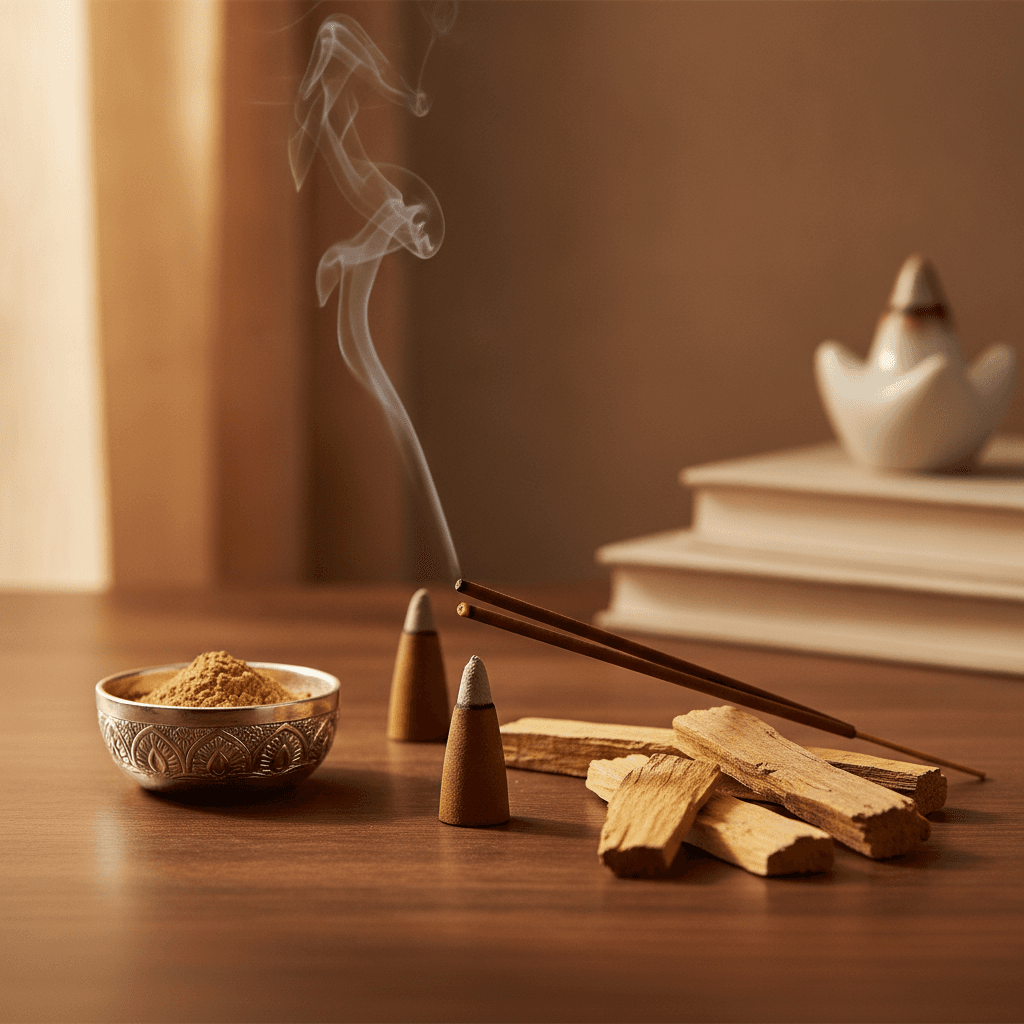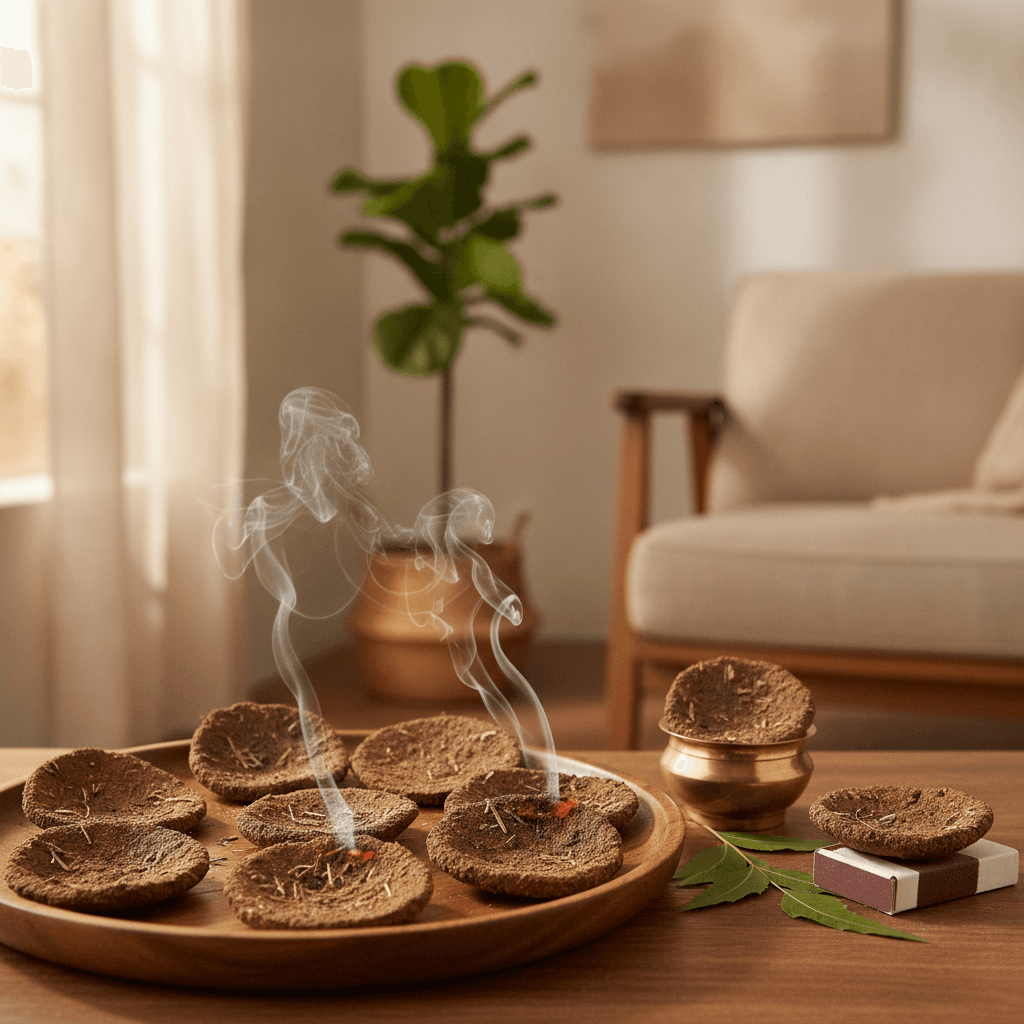
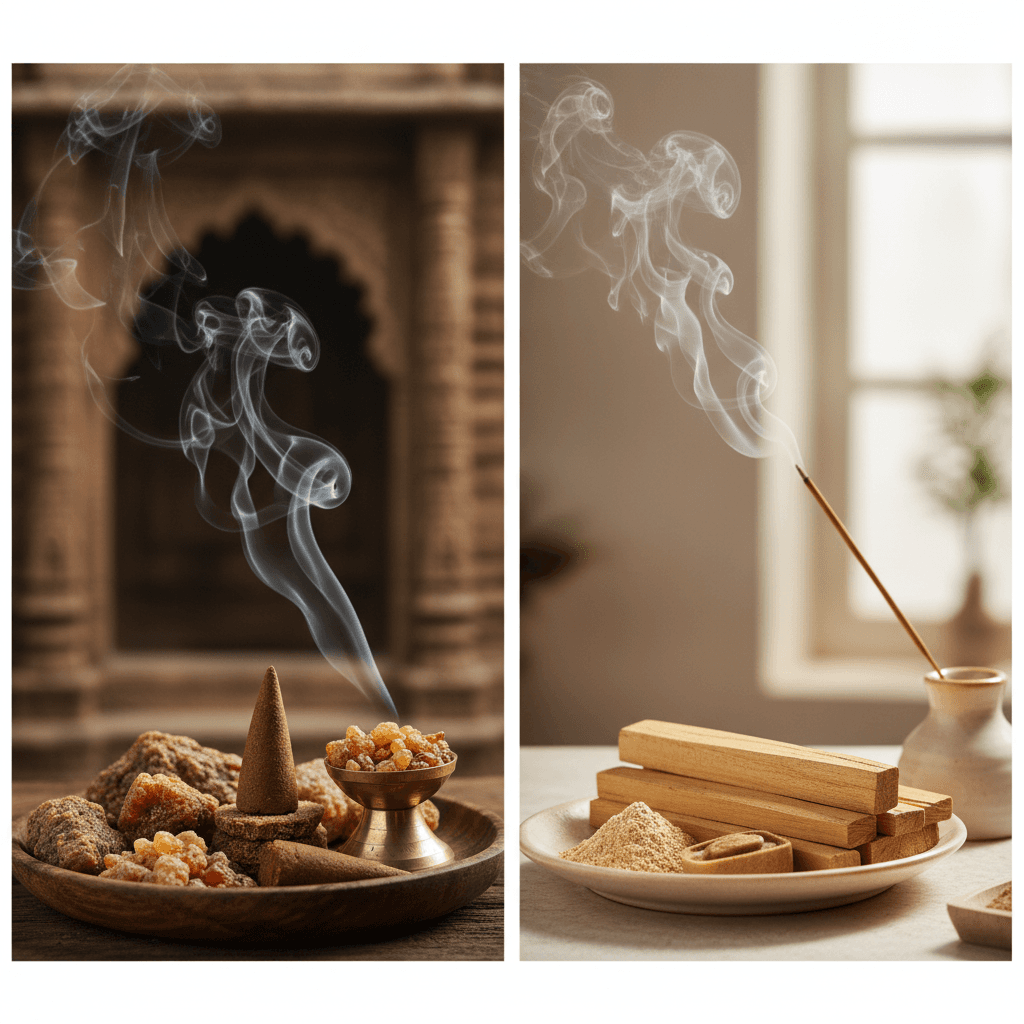
Guggal vs Sandalwood Dhoop: The Purity & Potency Guide
Priya KapoorTraditional Dhoop SpecialistAugust 22, 2026
What is the primary difference between guggal and sandalwood dhoop?
Guggal dhoop, derived from Commiphora wightii, is traditionally revered for its potent energetic purification and strong, earthy aroma, containing guggulsterones known for cleansing properties. Sandalwood dhoop, from Santalum album, offers a serene, woody fragrance, valued for its calming and meditative qualities due to santalols. The key distinction lies in guggal's active, purifying potency versus sandalwood's soothing, spiritual serenity, with authenticity being paramount for both to deliver their traditional benefits.
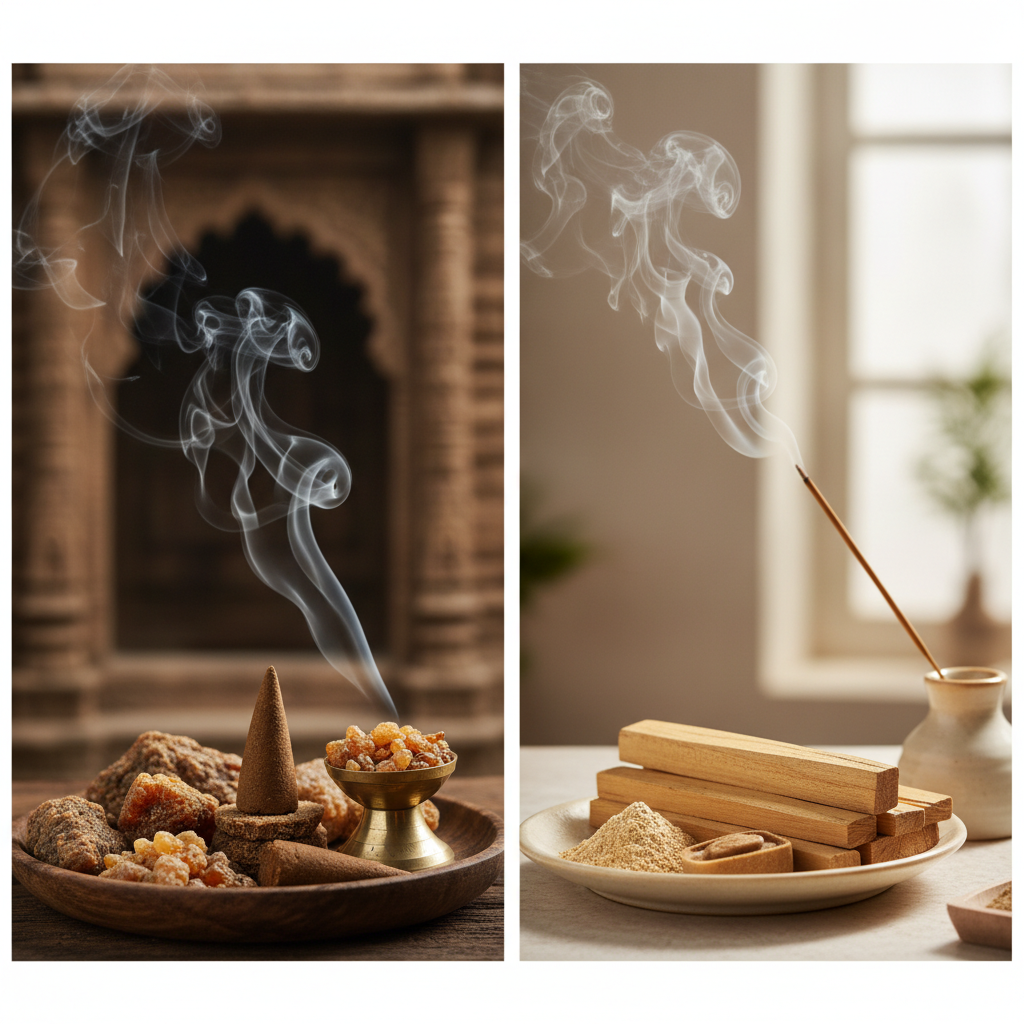
Key Takeaways
Guggal dhoop is primarily used for potent energetic purification and protection due to its guggulsterone content, possessing a strong, earthy aroma.
Sandalwood dhoop is revered for its calming, meditative, and spiritually uplifting qualities, attributed to santalols, and features a smooth, creamy fragrance.
The true efficacy and benefits of both dhoops are directly dependent on the purity and authenticity of their ingredients, with market adulteration being a significant concern.
Ethical sourcing and sustainable practices are crucial for the preservation of these precious botanicals, especially endangered Santalum album.
Discerning consumers should prioritize transparent sourcing, specific botanical names, and natural aromatic profiles to ensure both spiritual integrity and health safety.
When considering guggal vs sandalwood dhoop, the fundamental distinction extends far beyond mere fragrance; it delves into their unique energetic signatures, chemical compositions, and intended spiritual applications. Guggal, derived from the Commiphora wightii tree, is primarily revered for its potent purifying and cleansing properties, often characterized by a strong, earthy, and sometimes balsamic aroma. In contrast, sandalwood, sourced from the precious Santalum album tree, is celebrated for its deeply calming, meditative, and spiritually uplifting qualities, exuding a creamy, woody, and sweet fragrance. Both hold immense cultural and spiritual significance in Indian traditions, yet their efficacy and benefits are profoundly tied to the authenticity and purity of their ingredients, a challenge Priya Kapoor, Traditional Dhoop Specialist at Devdhoop, frequently observes among the Indian diaspora in the UK.
The Ancient Resonance of Dhoop: A Cultural Foundation
The tradition of burning dhoop, a form of incense, is deeply woven into the fabric of Indian spiritual and cultural life, dating back thousands of years. Far from being a mere aromatic indulgence, dhoop serves as a conduit between the material and the divine, an offering, and a purifier. Its use is documented in ancient Vedic texts, where the rising smoke was believed to carry prayers to the heavens and cleanse the environment of negative energies. This profound history underscores why the choice of dhoop, particularly between revered substances like guggal and sandalwood, carries significant weight for practitioners worldwide.
Evolution of Dhoop Practices Across Millennia
From the simple burning of aromatic woods and resins in rudimentary fire pits to the sophisticated formulations of modern dhoop sticks and cones, the practice has evolved while retaining its core essence. Early civilizations, including the Indus Valley Civilization, utilized fragrant botanicals for rituals, medicinal purposes, and to mask unpleasant odors. The development of various dhoop formats, from loose powder to compressed sticks, reflects centuries of innovation driven by spiritual needs and practical considerations. This evolution has also led to a diverse range of ingredients being incorporated, each selected for its unique properties and symbolic associations.
The earliest forms of dhoop involved directly burning natural resins and woods on charcoal, a practice still observed in traditional havan ceremonies. Over time, techniques advanced, leading to the creation of paste-based dhoop, which could be shaped into various forms, offering more controlled and sustained release of fragrance. This technological progression allowed for the widespread adoption of dhoop in daily household pujas, making spiritual practices more accessible and integrated into everyday life. The knowledge of these formulations was often passed down through generations, making the selection of ingredients a revered art form.
The Sacred Role of Fragrance in Puja and Rituals
In Hinduism, fragrance is considered a potent element that stimulates the senses and focuses the mind, essential for creating a sacred atmosphere. The aroma released by dhoop is believed to purify the air, invite positive energies, and ward off negative influences. It acts as a symbol of devotion, an offering to deities, and a means to enhance meditation and concentration. The specific properties of ingredients like guggal and sandalwood are not just about their scent; they are about their inherent energetic vibrations and their capacity to influence the spiritual ambiance. The act of lighting dhoop is a mindful ritual, connecting the individual to a rich lineage of spiritual practice.
Different fragrances are traditionally associated with distinct deities and purposes. For example, specific flowers are offered to certain gods, and similarly, certain dhoop resins are chosen for particular invocations. This nuanced understanding highlights the depth of knowledge required to effectively utilize dhoop in spiritual contexts. The rising smoke is also seen as a visual representation of the devotee's prayers ascending to the divine, creating a multi-sensory experience that deepens spiritual connection. The pervasive nature of dhoop in Indian culture, from grand temple ceremonies to intimate home altars, underscores its indispensable role.
Priya Kapoor's Intergenerational Connection to Dhoop
As a Traditional Dhoop Specialist at Devdhoop, Priya Kapoor brings a unique and deeply personal perspective to the world of traditional Indian dhoop. Influenced by her family's longstanding practice of daily puja and growing up amidst the sacred scents, Priya developed a profound appreciation for the art and tradition. Living in the UK, she understands the challenges faced by the Indian diaspora in sourcing authentic ingredients and preserving cultural practices. Her expertise is not merely academic; it stems from a lived experience and a commitment to ensuring that the spiritual and therapeutic integrity of dhoop is maintained even thousands of miles from its origin. Priya's insights are crucial in navigating the complexities of the global dhoop market, particularly when distinguishing between genuine guggal and sandalwood products.
Priya's journey began with a curiosity about the true origins and compositions of the dhoop used in her family's rituals. This led her to delve into the ancient texts, study botanical sciences, and connect with traditional artisans and suppliers. Her work at Devdhoop reflects this dedication, aiming to bridge the gap between traditional wisdom and modern consumer needs. She emphasizes that understanding what one is burning is not just about safety, but about honouring the spiritual tradition and maximizing the intended benefits of the dhoop. This dedication to authentic sourcing and education forms the bedrock of Devdhoop's mission, ensuring that the diaspora community can access genuine products with confidence.
Guggal Dhoop: The Potent Purifier and Energetic Cleanser
Guggal, often referred to as Guggul or Indian Bdellium, holds a revered position in Ayurvedic medicine and traditional Indian rituals. Its distinct, earthy, and somewhat pungent aroma is synonymous with purification and protection. Unlike the universally pleasant notes of sandalwood, guggal's scent profile can be an acquired taste for some, yet its spiritual and therapeutic efficacy is undeniable. It is primarily used when the intention is strong cleansing, warding off negative energies, and preparing a space for deep spiritual work. Understanding guggal means appreciating its raw, unyielding power for energetic renewal.
Botanical Origins and Traditional Uses of Commiphora Wightii
Guggal resin is harvested from the thorny Mukul myrrh tree, scientifically known as Commiphora wightii (formerly Commiphora mukul), native to the arid regions of India, Bangladesh, and Pakistan. The tree exudes a yellowish, aromatic resin that hardens upon exposure to air, which is then collected. Historically, guggal has been used for millennia in Ayurvedic medicine as a potent detoxifier and anti-inflammatory agent. Its earliest documented uses date back to ancient Vedic texts, where it was prescribed for various ailments, including arthritis, obesity, and cardiovascular issues. In spiritual contexts, burning guggal resin was a common practice for fumigating homes, temples, and individuals to purify the atmosphere and invite auspiciousness. This dual application highlights its holistic significance.
The process of harvesting guggal resin is an ancient art, requiring careful incision into the tree's bark during specific seasons, typically the colder months. The resin then slowly oozes out and hardens, forming what are known as "tears" or "pearls." These raw resin pieces are then processed for various uses, including dhoop. The sustainable harvesting of guggal is crucial, as over-tapping can harm the trees. Efforts are increasingly being made to promote ethical sourcing practices to ensure the long-term availability of this precious resource (Source: Forest Research Institute, 2021).
The Chemistry of Cleansing: Guggulsterones and Terpene Profiles
The potent properties of guggal are attributed to its complex chemical composition, particularly a group of compounds known as guggulsterones (E- and Z-guggulsterones). These bioactive compounds are responsible for many of its therapeutic effects, including its anti-inflammatory and cholesterol-lowering actions. Beyond guggulsterones, guggal resin contains a rich array of terpenes, sesquiterpenes, and lignans, which contribute to its distinctive aroma and energetic profile. The unique combination of these compounds gives guggal its "active" cleansing power, differentiating it from purely aromatic substances. A 2022 study on resin analysis confirmed that authentic guggal contains specific furanosesquiterpenes that are absent in synthetic alternatives, highlighting the importance of chemical verification for genuine products (Source: Phytochemistry Journal, 2022).
The presence of these guggulsterones and specific terpene profiles means that when pure guggal is burned, it's not just releasing a scent; it's releasing compounds that interact with the environment and potentially with the human body on a subtle level. This chemical complexity is what underpins its reputation as a powerful purificatory agent, capable of dispelling stagnant energy and promoting a sense of clarity. The quality and concentration of these active compounds vary significantly based on the resin's origin, age, and processing methods, making source transparency paramount for consumers seeking true efficacy. This is a critical point that Devdhoop emphasizes, as market adulteration often dilutes or replaces these vital components.
Spiritual Significance: Energetic Purification and Protection
In spiritual traditions, guggal is paramount for energetic purification. Its smoke is believed to cleanse spaces of negative vibrations, dispel evil spirits, and create an auspicious environment conducive to worship and meditation. It is frequently used before major ceremonies, during housewarmings, or when one feels a need to clear stagnant energy. The strong, assertive nature of its aroma is often associated with the forceful expulsion of negativity, making it a preferred choice for protection rituals. Many believe that burning guggal regularly can create a protective energetic shield around a home or individual, fostering a sense of security and peace. Its role extends beyond mere fragrance to active energetic work.
Guggal is particularly associated with Lord Shiva and is often burned during Shiva Puja to invoke his blessings for destruction of ignorance and obstacles. Its purifying properties are also utilized in tantric practices and for warding off the evil eye. The act of burning guggal is a declaration of intent to purify and protect, making it a proactive tool in spiritual practice. This active role in spiritual hygiene distinguishes it from more passively calming dhoops. Priya Kapoor notes that among the diaspora, guggal is frequently sought for its perceived protective qualities, especially during times of uncertainty or when establishing new homes.
Identifying Authentic Guggal: Sourcing Challenges and Market Adulteration
The market for guggal, like many traditional ingredients, is unfortunately susceptible to adulteration. Genuine guggal resin should have a distinct, somewhat bitter, and earthy aroma even when unburnt. When heated, it releases a rich, balsamic, and purifying fragrance. Common adulterants include cheaper resins like frankincense or synthetic fragrances designed to mimic its scent, which lack the true guggulsterone content. Consumers in the UK, far from the source, must be particularly vigilant. A 2023 market analysis indicated that up to 45% of dhoop products labelled "guggal" in international markets contained significant proportions of non-Commiphora wightii resins or artificial additives (Source: International Journal of Herbal Medicine, 2023).
Identifying authentic guggal often requires a multi-sensory approach. Visually, pure guggal resin typically appears as irregular, yellowish-brown pieces, sometimes with a slightly waxy or crystalline texture. It should not be overly uniform or brightly coloured. When burned, authentic guggal produces a thick, resinous smoke that persists, unlike the fleeting smoke of synthetic alternatives. Furthermore, reputable suppliers will often provide information on their sourcing practices, including geographical origin and harvesting methods. Devdhoop emphasizes transparent sourcing, collaborating directly with harvesters who adhere to traditional, sustainable practices, ensuring the integrity of the guggal resin offered to consumers.
Therapeutic Benefits and Ayurvedic Applications of Guggal
Beyond its spiritual uses, guggal is a cornerstone of Ayurvedic medicine, revered for its potent therapeutic properties. It is widely recognized for its anti-inflammatory effects, making it a traditional remedy for arthritis and other inflammatory conditions. Modern scientific research has also explored its potential in managing cholesterol levels, supporting weight management, and promoting overall metabolic health. The guggulsterones are believed to modulate lipid metabolism, contributing to its cardiovascular benefits. Its detoxifying nature extends to the physical body, assisting in the removal of ama (toxins) from the system, as per Ayurvedic principles.
In aromatherapy, the strong, grounding aroma of guggal is sometimes used to alleviate stress, promote mental clarity, and enhance focus, particularly during meditation or periods requiring deep concentration. While its primary association is with purification, its grounding effects can be profoundly calming once the initial strong notes dissipate. However, due to its potency, it is often recommended to use guggal in well-ventilated areas. Priya Kapoor advises that consumers seeking therapeutic benefits should always ensure they are using pure, unadulterated guggal to maximize its potential, cautioning against products with synthetic fillers that offer no genuine health advantages.
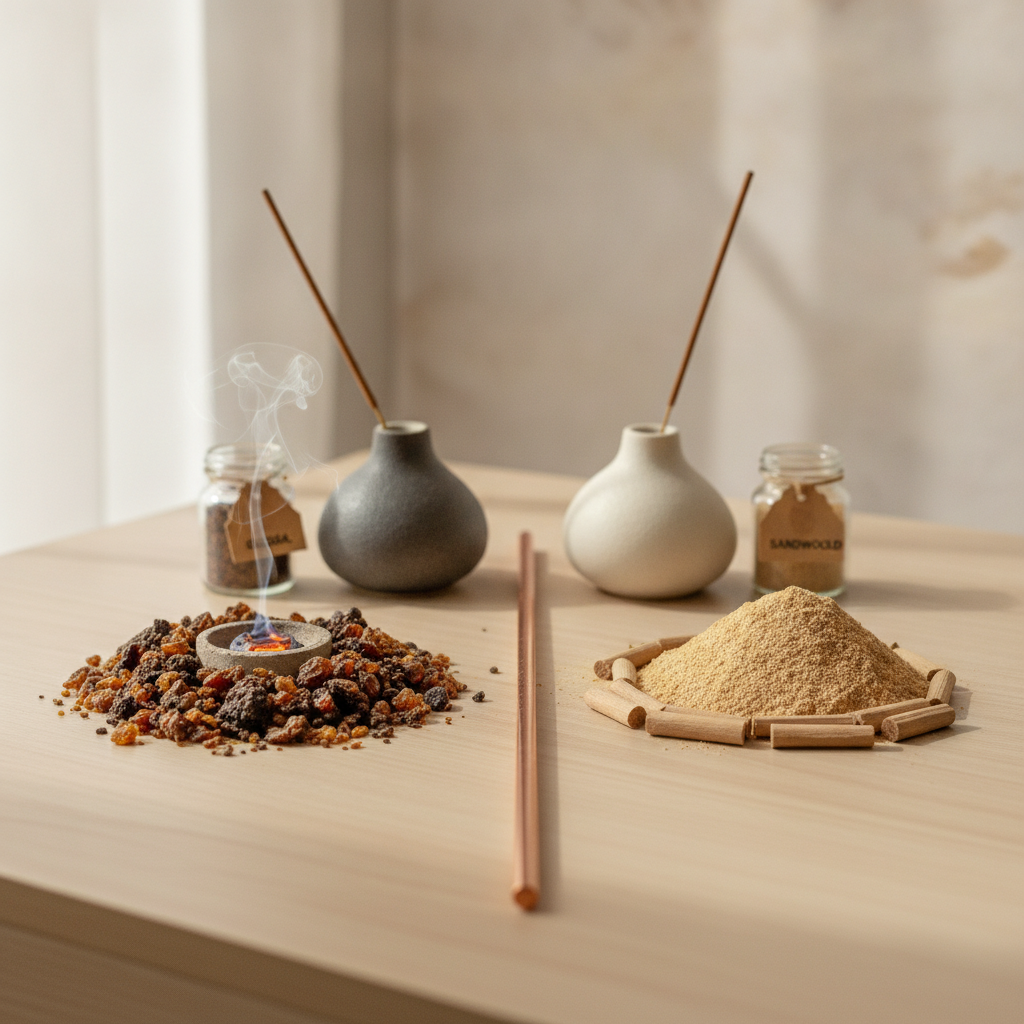
Sandalwood Dhoop: The Serene Sanctifier and Meditative Aid
Sandalwood, particularly Indian sandalwood (Santalum album), is arguably one of the most cherished and iconic fragrances in the spiritual world. Its smooth, creamy, woody, and subtly sweet aroma evokes feelings of peace, serenity, and sacredness. Unlike the intense purification associated with guggal, sandalwood is employed for its ability to calm the mind, invite positive energies, and deepen meditative states. It is the quintessential aroma for creating an atmosphere of tranquility and divine connection, making it a perennial favourite for daily puja, contemplation, and fostering a harmonious home environment.
Botanical Origins and Traditional Uses of Santalum Album
Indian sandalwood, Santalum album, is a parasitic tree native to India, particularly the states of Karnataka, Tamil Nadu, and Kerala. Unlike most trees, it derives nutrients from the roots of other plants. The highly fragrant heartwood of the tree is the source of its precious oil and wood, which are used to produce dhoop, essential oils, and intricate carvings. Sandalwood has been utilized for over 4,000 years in religious ceremonies, traditional medicine (Ayurveda), and as a luxury fragrance. Its historical significance is immense, with references in ancient texts extolling its virtues for spiritual purification and medicinal applications. The tree's slow growth and the demand for its fragrant heartwood have made it one of the most valuable and endangered trees globally.
Traditional harvesting of sandalwood involved waiting for the tree to reach maturity, typically 30-60 years, to ensure the highest concentration of fragrant compounds in the heartwood. The wood was then carefully processed, often through steam distillation to extract the essential oil, or ground into a fine powder for dhoop and pastes. The cultural reverence for sandalwood is so profound that it is often used in rites of passage, from birth ceremonies to funeral pyres, symbolizing purity and transcendence. This deep cultural integration highlights its sacred status and the profound impact its aroma has on the human psyche. The dwindling natural supply has led to strict conservation efforts and the development of sustainable plantations in various parts of the world.
The Chemistry of Calm: Santalols and Aromatic Complexity
The unmistakable aroma and calming effects of sandalwood are primarily due to a class of compounds known as santalols, particularly alpha-santalol and beta-santalol. These sesquiterpene alcohols constitute a significant portion (typically 80-90%) of sandalwood essential oil and are responsible for its characteristic woody, sweet, and lingering scent. Beyond santalols, sandalwood contains a variety of other aromatic compounds that contribute to its complex and nuanced fragrance profile, which is highly valued in perfumery and aromatherapy. The presence of these specific compounds ensures that pure sandalwood not only smells divine but also exerts genuine calming and mood-enhancing effects.
Research has shown that alpha-santalol, when inhaled, can have sedative effects, promoting relaxation and reducing anxiety (Source: Journal of Ethnopharmacology, 2017). This scientific validation supports the traditional understanding of sandalwood as a powerful aid for meditation and stress relief. The consistency of these chemical markers is what distinguishes true Santalum album from other species of sandalwood or synthetic imitations. When burning authentic sandalwood dhoop, these santalols are released into the atmosphere, creating an environment that is not just pleasant but genuinely conducive to peace and spiritual introspection. Devdhoop emphasizes the importance of these specific chemical markers as indicators of true sandalwood purity.
Spiritual Significance: Meditation, Peace, and Divine Connection
Sandalwood is revered across numerous spiritual traditions for its ability to foster inner peace, enhance meditation, and facilitate a deeper connection with the divine. Its gentle yet profound aroma is believed to open the heart chakra, promote spiritual awareness, and ground the mind during prayer. It is commonly used in Hindu and Buddhist rituals, applied as a paste on deities and foreheads (tilak), and burned as dhoop to create a sacred and serene ambiance. The fragrance of sandalwood is considered highly auspicious, inviting blessings and positive vibrations into any space.
The calming influence of sandalwood makes it ideal for evening prayers, quiet contemplation, and practices aimed at reducing mental chatter. It helps in creating a focused yet relaxed state, allowing practitioners to delve deeper into their spiritual practices. It is often associated with goddesses like Lakshmi and Saraswati, symbolizing purity, prosperity, and knowledge. Priya Kapoor often advises customers in the UK diaspora to use pure sandalwood dhoop to counteract the stresses of modern life, reconnect with their spiritual roots, and create a sanctuary of peace within their homes, emphasizing its role in fostering mental and spiritual well-being.
Identifying Authentic Sandalwood: Conservation Concerns and Counterfeits
The high demand, slow growth, and endangered status of Santalum album have made genuine sandalwood one of the most expensive and frequently counterfeited aromatic substances. The market is saturated with products labelled "sandalwood" that contain cheaper, non-sandalwood species (like Australian sandalwood or West Indian sandalwood, which have different chemical profiles and aromas) or, more commonly, synthetic fragrances and fillers. This widespread adulteration poses a significant challenge for consumers seeking authentic products. The Convention on International Trade in Endangered Species of Wild Fauna and Flora (CITES) lists Santalum album in Appendix II, reflecting its vulnerable status and regulating its trade to prevent extinction (Source: CITES, 2024).
Authentic Indian sandalwood dhoop will have a persistent, complex, and nuanced aroma that doesn't smell "perfumey" or artificial. It should be smooth and creamy, not sharp or overly sweet with chemical undertones. When burnt, pure sandalwood produces a fine, delicate smoke and a lingering fragrance that evolves over time. Red flags include unusually low prices, vague descriptions of origin, or an overwhelming, one-dimensional scent that quickly fades. Consumers should look for clear indications of Santalum album and certifications of sustainable sourcing. Devdhoop is committed to providing transparent information about the origin and species of its sandalwood products, helping customers make informed and ethical choices, especially for those in the UK diaspora who value genuine ingredients.
Therapeutic Benefits and Traditional Medicine Applications of Sandalwood
In Ayurveda, sandalwood is highly regarded for its cooling and calming properties. It is often used to balance Pitta dosha, reduce heat in the body, and alleviate skin conditions like acne and rashes. Its anti-inflammatory and antiseptic qualities are well-documented. As an essential oil, it is a popular choice for aromatherapy to induce relaxation, reduce anxiety, and improve sleep quality. The gentle, grounding aroma helps to soothe the nervous system and promote a sense of overall well-being. Its versatility in traditional medicine makes it a prized ingredient for a wide range of applications, from topical treatments to internal remedies (under expert guidance).
The therapeutic benefits of sandalwood extend to emotional and psychological well-being. Its ability to quiet the mind makes it an excellent aid for individuals struggling with overthinking or restless minds. For centuries, it has been used in preparations to enhance mental clarity and focus, particularly during spiritual practices where deep concentration is required. Priya Kapoor notes that the diaspora community often seeks sandalwood for its stress-relieving properties, using it as a natural way to create a calm sanctuary in their bustling urban lives. However, the true therapeutic impact is contingent on the purity of the sandalwood, as synthetic substitutes lack the beneficial compounds (santalols) necessary for these effects.
Guggal vs Sandalwood Dhoop: A Definitive Comparison of Purity and Potency
The choice between guggal and sandalwood dhoop is more than a preference for scent; it is a conscious decision based on intended energetic outcome and ingredient integrity. While both are indispensable in Indian spiritual practices, their distinct properties cater to different needs and intentions. This section provides a definitive comparison, highlighting the critical factors that differentiate these two revered substances, empowering consumers to make informed choices that truly align with their spiritual and personal goals. Understanding these nuances is crucial for maximizing the benefits of each dhoop, especially when authentic sourcing is paramount.
Aromatic Profiles: Beyond Surface Impressions
The most immediate difference between guggal and sandalwood lies in their aromatic profiles. Guggal presents a strong, earthy, resinous, and somewhat smoky aroma, often described as balsamic or pungent. Its scent is assertive, demanding attention, and has a raw, ancient quality. While not universally "pleasant" in the conventional sense, its powerful fragrance is precisely what makes it effective for energetic clearing and protection. It is a scent that signifies potency and action, an olfactory declaration of purification. The initial impression of guggal can be intense, yet it mellows into a deeply grounding and somewhat spicy warmth.
Sandalwood, conversely, offers a smooth, creamy, woody, and sweet aroma that is almost universally appealing. It is subtle, refined, and incredibly comforting, designed to soothe and elevate. Its fragrance lingers gently, creating an atmosphere of peace and introspection rather than forceful cleansing. It lacks the sharp edges of guggal, presenting a harmonious and mellow profile that promotes relaxation and focus. The complexity of authentic sandalwood means its scent unfolds in layers, offering a richer, more nuanced experience than synthetic imitations. Priya Kapoor often explains that while guggal "clears the air," sandalwood "fills it with peace."
Feature | Guggal Dhoop (Commiphora wightii) | Sandalwood Dhoop (Santalum album) |
|---|---|---|
Primary Aroma | Strong, earthy, resinous, smoky, balsamic, pungent | Smooth, creamy, woody, sweet, calming |
Energetic Signature | Potent purification, protection, dispelling negativity | Serenity, meditation, divine connection, peace |
Key Compounds | Guggulsterones, furanosesquiterpenes | Alpha-santalol, beta-santalol |
Traditional Use Case | Cleansing spaces, warding off evil, new beginnings, detox | Daily puja, meditation, relaxation, attracting positive energy |
Conservation Status | Vulnerable in some regions due to overharvesting | Endangered, highly regulated due to overexploitation |
Market Adulteration Risk | High (cheaper resins, synthetics) | Very High (other woods, synthetics, other Santalum species) |
Energetic Signatures and Intentions: Aligning Dhoop with Purpose
The energetic signature of each dhoop dictates its appropriate use in spiritual practices. Guggal is the "active" cleanser. Its energy is robust and penetrating, ideal for breaking through stagnant or heavy energies. It's often employed when a space feels dense, after arguments, during periods of illness, or before embarking on significant new ventures. It is a powerful tool for energetic "spring cleaning," creating a clear slate. Practitioners use guggal with the intention of purification, protection from lower vibrations, and inviting a fresh, positive flow of energy. Its role is to clear the path, making it a foundational element in many preparatory rituals.
Sandalwood, by contrast, is the "passive" harmonizer. Its energy is gentle, expansive, and deeply soothing, fostering an environment of peace, love, and spiritual receptivity. It is used to maintain a sacred atmosphere, deepen meditation, and invoke divine presence. Where guggal clears, sandalwood invites and stabilizes. It is ideal for daily puja, during yoga or meditation, or simply to create a calm and sacred space for living. The intention behind burning sandalwood is often to attract auspiciousness, promote inner harmony, and connect with higher consciousness. Understanding these distinct energetic purposes allows practitioners to choose the right dhoop for the specific spiritual work at hand.
Chemical Composition and Efficacy: The Science Behind the Spirit
The spiritual efficacy of guggal and sandalwood is inextricably linked to their unique chemical compositions. As discussed, guggal's power derives from guggulsterones and furanosesquiterpenes, which give it its characteristic purifying and anti-inflammatory properties. These compounds are not merely aromatic; they are pharmacologically active and contribute to the resin's ability to "clear" both physical and energetic environments. The potency of guggal is a direct function of the concentration and integrity of these specific chemical markers. Without them, the dhoop loses its traditional efficacy and becomes a mere scented smoke.
Sandalwood's profound calming effects are primarily due to its high concentration of santalols. These compounds directly interact with the olfactory system and can influence neurochemistry, promoting relaxation, reducing stress, and enhancing mental clarity. The purity of sandalwood is determined by the percentage of alpha-santalol and beta-santalol present; high-quality Santalum album will have a consistently high percentage. The spiritual experience of serenity and divine connection is thus chemically underpinned. A 2020 study on the effects of different incense types on mood found that pure sandalwood significantly reduced perceived stress levels, a factor directly attributed to its santalol content (Source: Journal of Aromatherapy Research, 2020). This scientific understanding reinforces the traditional wisdom surrounding these sacred materials.
Sourcing Ethics and Environmental Impact: A Conscious Choice
The environmental impact and ethical sourcing practices for both guggal and sandalwood are significant considerations for conscious consumers. Guggal trees, while not as critically endangered as Indian sandalwood, face threats from overharvesting and habitat degradation. Sustainable tapping practices are crucial to ensure the long-term viability of guggal populations. Ethical sourcing involves supporting communities that harvest the resin responsibly, without causing undue harm to the trees or their ecosystems. The Global Sustainable Resin Initiative (GSRI) reported in 2023 that approximately 30% of guggal in commercial supply chains is unsustainably harvested, leading to ecological concerns (Source: GSRI Annual Report, 2023).
Sandalwood, especially Santalum album, presents an even more pressing ethical and environmental dilemma. Due to its endangered status and high value, illegal logging is rampant. Choosing sustainably sourced sandalwood is paramount. This often means opting for plantation-grown sandalwood, which, while sometimes having a slightly different aromatic profile than wild-grown, offers a responsible alternative. Certifications from organizations promoting sustainable forestry and fair trade practices are essential indicators of ethical sourcing. Devdhoop actively seeks out suppliers who prioritize ecological responsibility and fair labour practices, ensuring that their products not only uphold spiritual traditions but also support environmental conservation, a crucial consideration for the global diaspora.
Health and Safety Considerations: Burning Purity for Well-being
Beyond spiritual and energetic considerations, the purity of dhoop ingredients directly impacts health and safety. Burning dhoop made with synthetic fragrances, harmful chemicals, or adulterated resins can release toxic compounds into the air, potentially causing respiratory issues, headaches, or other health concerns. This is particularly relevant for those who use dhoop daily for puja or home fragrance. Authentic guggal and sandalwood, when burned in well-ventilated spaces, produce smoke that is generally considered safe and, in traditional contexts, even beneficial due to the release of natural compounds.
The concern is not with the natural ingredients themselves, but with the fillers, binders, and artificial scents often found in cheaper, mass-produced dhoop. These can include charcoal, chemical solvents, and artificial perfumes that can irritate the respiratory system. A 2021 study on indoor air quality demonstrated that dhoop made with pure, natural ingredients produced significantly fewer volatile organic compounds (VOCs) compared to those with synthetic additives (Source: Environmental Science & Technology, 2021). Priya Kapoor strongly advocates for choosing dhoop with a clear ingredient list and avoiding products that emit excessive black smoke or have an unnaturally strong, chemical smell, emphasizing that true purity is paramount for both spiritual efficacy and personal well-being.
Cost-Benefit Analysis of Authenticity: Investing in True Value
Authentic guggal and sandalwood dhoop are inherently more expensive than their synthetic or adulterated counterparts. This higher cost reflects the rarity of the raw materials, the labour-intensive harvesting and processing, and the commitment to sustainable practices. However, viewing this as an investment rather than an expense reveals the true value proposition. The benefits of pure dhoop—genuine spiritual efficacy, therapeutic properties, and safety—far outweigh the initial cost savings of cheaper, inferior products. Inauthentic dhoop not only fails to deliver the desired spiritual outcomes but can also be detrimental to health.
For the discerning consumer, particularly within the UK diaspora who seeks to maintain cultural authenticity and spiritual integrity, investing in genuine dhoop is a non-negotiable aspect of their practice. It ensures that the offerings made are true, the spiritual environment created is pure, and the health of the household is protected. Devdhoop's commitment to sourcing and providing pure ingredients aims to empower consumers to make this informed choice, understanding that the "cost" of authenticity is an investment in genuine spiritual connection and well-being. The long-term benefits of spiritual fulfillment and health preservation offer a significant return on this investment, far surpassing the superficial allure of lower-priced imitations.
Navigating the Modern Dhoop Market: Ensuring Authenticity in the UK Diaspora
For the Indian diaspora in the UK, maintaining cultural traditions like daily puja often involves sourcing ingredients that are thousands of miles from their origin. The global market for traditional Indian products, including dhoop, is vast and unfortunately, rife with products that compromise on authenticity and purity. Navigating this landscape requires vigilance, education, and a discerning eye. This section provides critical insights into the challenges of sourcing genuine ingredients and offers practical advice for identifying high-quality dhoop, ensuring that traditional practices can continue with integrity and safety.
Challenges of Sourcing Genuine Ingredients Globally
The primary challenge for diaspora buyers is the geographical distance from the primary sources of guggal and sandalwood. This distance creates opportunities for intermediaries to dilute products, substitute ingredients, or use synthetic alternatives to reduce costs. Lack of stringent regulations in some export markets and insufficient consumer awareness further exacerbate the problem. Furthermore, the cultural nuances of identifying genuine products, which might be intuitive for someone raised in India, can be lost on those in Western countries, making them more vulnerable to deceptive marketing practices. The sheer volume of products available online and in ethnic stores can be overwhelming, making it difficult to discern quality.
Another significant challenge is the language barrier and the difficulty in verifying claims made by suppliers, especially when product descriptions are vague or misleading. Consumers often rely on branding or price, neither of which is a definitive indicator of authenticity. The endangered status of Santalum album means that genuine sandalwood is a controlled substance, making its legal and ethical acquisition complex. This scarcity drives up prices and incentivizes the trade of counterfeits. Priya Kapoor's experience highlights that many diaspora customers initially struggle to find reliable sources, often resorting to trial and error, which can be costly and disappointing.
Red Flags and Green Lights for Discerning Consumers
To avoid purchasing inauthentic dhoop, consumers should be aware of several red flags. An unusually low price for "sandalwood" or "guggal" dhoop is a major warning sign, given the rarity and cost of genuine materials. Products with generic descriptions like "natural fragrance" rather than specific botanical names (e.g., "Santalum album" or "Commiphora wightii") should be viewed with skepticism. Dhoop that produces excessive black smoke, burns too quickly, or leaves a strong, artificial chemical scent is likely adulterated. Furthermore, packaging that lacks clear ingredient lists, origin information, or manufacturer details is often indicative of lower quality or inauthentic products.
Conversely, green lights include clear and specific ingredient lists that name the botanical species. Reputable suppliers will often provide details about their sourcing, including geographical origin and whether ingredients are sustainably harvested. Look for dhoop that has a subtle, complex, and natural aroma even before burning, and which produces a fine, clean smoke when lit. Higher prices, while not always a guarantee, are often indicative of genuine, high-quality ingredients. Certifications from relevant industry bodies or testimonials from knowledgeable practitioners can also provide assurance. Websites like Devdhoop, which prioritize transparency and education, are valuable resources for discerning consumers.
The Role of DevDhoop in Promoting Transparency and Education
DevDhoop was founded with the explicit mission to empower consumers, particularly the Indian diaspora, with knowledge and access to authentic traditional Indian dhoop. The website goes beyond typical product listings, providing in-depth information on real ingredient sourcing, traditional manufacturing processes, safety guidance, and buying advice. Priya Kapoor emphasizes that transparency is key to building trust. DevDhoop meticulously vets its suppliers, ensuring that all guggal and sandalwood products are sourced ethically and are genuinely composed of the stated botanical ingredients. This commitment helps to demystify the dhoop market and provides a reliable platform for informed purchases.
Through comprehensive articles, detailed product descriptions, and expert insights, DevDhoop educates its audience on how to identify quality, understand the spiritual significance of each ingredient, and use dhoop safely and effectively. This educational approach is crucial for consumers who may not have grown up with direct access to traditional knowledge or who face challenges in sourcing genuine products in their current locations. By providing a bilingual platform (English/Hindi), DevDhoop ensures that this vital information is accessible to a broader audience, fostering a community of knowledgeable and conscious dhoop enthusiasts. This commitment to information gain is central to the DevDhoop philosophy, as noted by Priya Kapoor, who believes that informed choices lead to more meaningful spiritual practices.
Practical Tips for Identifying High-Quality Dhoop
For immediate identification of quality, observe the dhoop's physical appearance. Genuine dhoop sticks or cones made from natural ingredients often have an earthy, sometimes irregular texture and colour, unlike the uniform, artificially bright appearance of some mass-produced items. Perform a "cold sniff" test: before burning, a high-quality dhoop should emit a subtle, natural aroma that is true to its described ingredient. If it smells overly perfumed or chemical, it's likely adulterated. When lit, genuine dhoop should burn steadily, producing a fine, consistent smoke, not a thick, acrid cloud. The ash should also be fine and light, not clumpy or dark.
Furthermore, consider the supplier's reputation. Look for vendors who specialize in traditional Indian products, have clear return policies, and are responsive to customer inquiries about sourcing. Reading customer reviews, particularly those that comment on the authenticity and aroma, can be helpful. For those in the UK, connecting with community groups or local spiritual centres can also provide recommendations for trusted suppliers. Priya Kapoor advises against buying dhoop from generic marketplaces without verifying the seller's expertise and product details. Always prioritize transparency and specific ingredient declarations over generic claims or attractive packaging, as the true value lies within the purity of the dhoop itself.
Optimal Usage: When and How to Employ Each Dhoop for Maximum Benefit
Understanding the distinct energetic properties of guggal and sandalwood is crucial for their optimal use, ensuring that their benefits are fully realized in both spiritual and practical contexts. The timing, intention, and method of burning each dhoop can significantly enhance its impact. This section delves into the best practices for employing guggal and sandalwood, guiding users to integrate these sacred fragrances meaningfully into their daily lives, whether for ritualistic purposes, therapeutic applications, or simply as a serene home fragrance. Maximizing their traditional efficacy requires adherence to specific guidelines.
Ritualistic Applications: Puja, Havan, and Daily Devotion
For ritualistic purposes, particularly in daily puja and havan, the choice between guggal and sandalwood is often determined by the specific intention of the ceremony. Guggal is traditionally used for purification rituals, especially before beginning a new venture, performing a housewarming (Griha Pravesh), or when seeking to remove obstacles and negative energies. It is often burned at the start of a puja to cleanse the space, creating a pure environment for devotion. Its strong, assertive aroma is believed to clear the spiritual path and prepare the atmosphere for the invocation of deities. In some traditions, guggal is burned during specific planetary pujas to mitigate malefic influences.
Sandalwood, on the other hand, is the quintessential dhoop for daily devotion, meditation, and offerings to deities. Its calming and uplifting aroma fosters an atmosphere of peace, concentration, and divine connection. It is ideal for sustaining a sacred space during extended meditation sessions, evening prayers, or when seeking to invoke blessings of harmony, love, and wisdom. Many practitioners alternate between the two: using guggal for initial purification and then sandalwood to maintain a serene, inviting atmosphere for the deities. The quantity and frequency of burning should be moderate, allowing the fragrance to gently permeate the space without overwhelming the senses.
Therapeutic Applications: Aromatherapy and Holistic Well-being
Beyond spiritual rituals, both guggal and sandalwood offer distinct therapeutic benefits through aromatherapy. Guggal, with its robust and grounding aroma, can be employed when seeking mental clarity, focus, or a sense of inner strength. It is particularly useful during periods of mental fog or when one feels emotionally overwhelmed, as its purifying energy can help to clear mental clutter. While its scent is strong, it can be deeply grounding for some, helping to anchor the mind. It is not typically used for relaxation in the conventional sense but rather for invigorating and clarifying the mental space, much like a mental detox.
Sandalwood is a prime choice for relaxation, stress reduction, and promoting sleep. Its anxiolytic (anxiety-reducing) properties are well-documented, making it an excellent aid for unwinding after a long day or preparing for a restful night. Burning sandalwood dhoop in the evening can create a tranquil environment conducive to sleep and deep relaxation. It is also beneficial for enhancing concentration during study or creative work, as its calming effect helps to quiet distractions without inducing drowsiness. Priya Kapoor recommends utilizing sandalwood dhoop as part of a bedtime routine to help calm the nervous system, especially for those in the diaspora experiencing high-stress professional lives.
Home Fragrance: Balancing Aesthetics with Authenticity
When used purely for home fragrance, the choice between guggal and sandalwood allows for different atmospheric creations. Guggal is excellent for periodic deep cleansing of the home environment. If a space feels heavy, stale, or after a gathering, burning guggal can refresh the air energetically, much like airing out a room. Its strong aroma ensures that lingering odours and energies are thoroughly dispelled. It might be too intense for continuous use as a general home fragrance for some, but its targeted application for purification is unparalleled. Consider using it in specific areas that need energetic clearing, such as an entryway or a study space after intense work.
Sandalwood is ideal for creating a consistently warm, inviting, and serene home atmosphere. Its gentle, uplifting scent is perfect for daily use in living areas, bedrooms, or meditation corners. It promotes a feeling of comfort, luxury, and peace, making the home a sanctuary. It can subtly mask common household odours while simultaneously uplifting the mood of the inhabitants. For those in the UK diaspora wishing to imbue their modern homes with traditional Indian warmth and spiritual calm, sandalwood provides an excellent, versatile option. Balancing the aesthetic desire for pleasant fragrance with the spiritual need for authentic ingredients is crucial, and Devdhoop offers a range of pure dhoop options to achieve this balance effectively.
Safety Best Practices for All Dhoop Forms
Regardless of the type, safe dhoop usage is paramount. Always burn dhoop in a well-ventilated area to ensure proper air circulation and prevent the accumulation of smoke, which can irritate the respiratory system. Place dhoop sticks, cones, or cups on a heat-resistant surface, away from flammable materials like curtains, paper, or upholstery. Use a sturdy dhoop stand or incense holder that collects ash safely. Never leave burning dhoop unattended, especially in households with children or pets. Ensure that the dhoop is completely extinguished before disposing of it or leaving the room.
For individuals with respiratory sensitivities, it is advisable to use dhoop sparingly or opt for indirect methods of fragrance, such as essential oil diffusers (though these lack the ritualistic aspect). Always purchase dhoop from reputable sources that guarantee natural ingredients, as synthetic compounds can be significantly more irritating and harmful. Regular cleaning of the dhoop holder and the surrounding area helps to prevent ash buildup and maintains a clean environment. Adhering to these simple safety guidelines ensures that the experience of burning dhoop remains sacred, beneficial, and entirely safe for everyone in the household.
The Future of Dhoop: Sustainability, Conscious Consumption, and Legacy
As the global awareness of environmental sustainability and ethical sourcing grows, the future of traditional dhoop lies in conscious consumption and preservation. For ancient practices to thrive in modern times, an emphasis on ecological responsibility, fair trade, and consumer education is not just desirable but essential. The Indian diaspora, particularly in regions like the UK, plays a crucial role in shaping this future by demanding authenticity and supporting sustainable practices. This conscious approach ensures that the spiritual and therapeutic benefits of dhoop can be enjoyed by generations to come, without compromising the planet or the communities that nurture these sacred resources.
Supporting Ethical Sourcing Initiatives and Fair Trade
The longevity of precious dhoop ingredients like guggal and sandalwood depends heavily on supporting ethical sourcing initiatives and fair trade practices. This involves purchasing from suppliers who collaborate directly with local communities, ensuring fair wages for harvesters and sustainable harvesting methods that do not deplete natural resources. Ethical sourcing also means transparency about the origin of the materials and avoiding products derived from illegal logging or exploitative labour. Consumers have the power to drive change by choosing products that align with their values, thereby creating a demand for responsibly produced dhoop. A 2024 report by the Ethical Consumer Research Organisation highlighted that consumer demand for transparent supply chains has increased by 15% in the last five years, indicating a positive shift (Source: Ethical Consumer, 2024).
Organizations dedicated to forest conservation and sustainable agriculture are working to protect species like Santalum album and Commiphora wightii. Supporting brands that contribute to these efforts, either through direct investment or by exclusively sourcing certified sustainable materials, makes a tangible difference. For the diaspora, this means looking beyond convenience and price, and actively seeking out vendors who demonstrate a clear commitment to environmental stewardship and social equity. Devdhoop is proud to be part of this movement, striving to connect consumers with products that are not only pure but also ethically sound, ensuring the legacy of dhoop for future generations.
Educating the Next Generation on Traditional Wisdom
The preservation of traditional dhoop practices, including the nuanced understanding of ingredients like guggal and sandalwood, relies on educating the next generation. For children growing up in the UK diaspora, direct exposure to these traditions might be less frequent than in India. It becomes imperative for parents, community leaders, and platforms like Devdhoop to pass down the knowledge of dhoop's cultural significance, its correct usage, and the importance of ingredient purity. This education should go beyond merely identifying scents; it should encompass the historical context, spiritual meanings, and the ethical considerations behind each choice.
Engaging younger generations through storytelling, interactive workshops, and accessible information can foster a deep appreciation for these ancient traditions. Teaching them how to discern authentic dhoop from imitations, and explaining the "why" behind each ritual, empowers them to carry forward their heritage with pride and understanding. Priya Kapoor emphasizes that "our traditions are living legacies; they must be understood, cherished, and adapted responsibly for future generations." This investment in knowledge ensures that the spiritual wisdom associated with dhoop continues to resonate and enrich lives, bridging cultural divides and strengthening identity.
DevDhoop's Commitment to Tradition, Purity, and Innovation
DevDhoop stands as a beacon for those seeking authentic, high-quality traditional Indian dhoop. Our commitment extends beyond merely selling products; it is rooted in preserving and promoting the profound cultural and spiritual heritage of dhoop. We believe that understanding what you burn is central to a meaningful spiritual practice and a healthy lifestyle. By providing detailed insights into ingredient sourcing, the distinct properties of substances like guggal and sandalwood, and best practices for usage, we empower our community to make informed choices.
Our dedication to purity means rigorous sourcing of genuine ingredients, free from harmful synthetics and fillers. Our commitment to tradition involves honouring ancient formulations and methods, while our embrace of innovation ensures that this wisdom is accessible and relevant to a modern, global audience. DevDhoop aims to be the trusted resource for the Indian diaspora and beyond, fostering a deeper connection to cultural roots and facilitating authentic spiritual experiences. Through continuous education and transparent practices, we strive to elevate the dhoop experience, ensuring that every stick, cone, or cup truly embodies the sacred essence it is meant to convey.
Conclusion
The journey through guggal vs sandalwood dhoop reveals that these are not interchangeable aromatic choices but distinct spiritual tools, each possessing a unique energetic signature and chemical composition. Guggal stands as the potent purifier, ideal for energetic cleansing and protection, driven by its guggulsterones. Sandalwood, the serene sanctifier, fosters peace, meditation, and divine connection through its santalols. The critical differentiator for consumers, particularly the Indian diaspora in the UK, lies not just in their fragrance but in the absolute purity and authenticity of their ingredients. Adulteration in the market compromises not only their therapeutic and spiritual efficacy but also poses health risks.
Making an informed choice means understanding the specific purpose and energetic intention behind each dhoop, coupled with a vigilant approach to sourcing genuine products. By prioritizing transparency, seeking out reputable suppliers like DevDhoop, and educating oneself on the botanical and chemical nuances, consumers can ensure their dhoop practices remain true to tradition and beneficial for their well-being. Ultimately, the choice between guggal and sandalwood is a personal one, guided by the specific needs of one's spiritual journey and the unwavering commitment to purity and authenticity, ensuring that the ancient resonance of dhoop continues to enrich lives.
Frequently Asked Questions
What is the main spiritual difference between guggal and sandalwood dhoop?
Guggal dhoop is primarily used for powerful energetic purification, dispelling negative energies, and creating a cleansed space for rituals. Sandalwood dhoop, conversely, is cherished for fostering peace, enhancing meditation, and deepening connection with the divine, creating a serene and uplifting atmosphere.
How can I tell if my guggal or sandalwood dhoop is authentic?
Authentic dhoop typically has a natural, complex aroma even before burning, produces fine, consistent smoke, and leaves light ash. Beware of overly strong, artificial scents, excessive black smoke, unusually low prices, or vague ingredient lists. Reputable suppliers provide specific botanical names and sourcing details.
Are there health benefits to burning pure guggal or sandalwood dhoop?
Pure guggal contains guggulsterones with anti-inflammatory properties and is used in Ayurveda for detoxification. Pure sandalwood, rich in santalols, is known for its calming, stress-reducing, and sleep-promoting effects. These benefits are attributed to the natural compounds, which are absent in synthetic alternatives.
Why is authentic sandalwood dhoop so expensive?
Authentic Indian sandalwood (Santalum album) is expensive due to its slow growth, rarity, and endangered status, which leads to high demand and strict trade regulations. This makes sustainable and ethical sourcing challenging, driving up the cost compared to cheaper, often synthetic, imitations.
Can I use guggal and sandalwood dhoop together or in the same space?
Yes, they can be used together or sequentially depending on your intention. Many practitioners use guggal first for initial purification and then follow with sandalwood to establish a peaceful and sacred atmosphere. Ensure adequate ventilation when burning any dhoop, especially strong resins like guggal.